Friday, November 05, 2021

Wallace - Performance and performance analysis

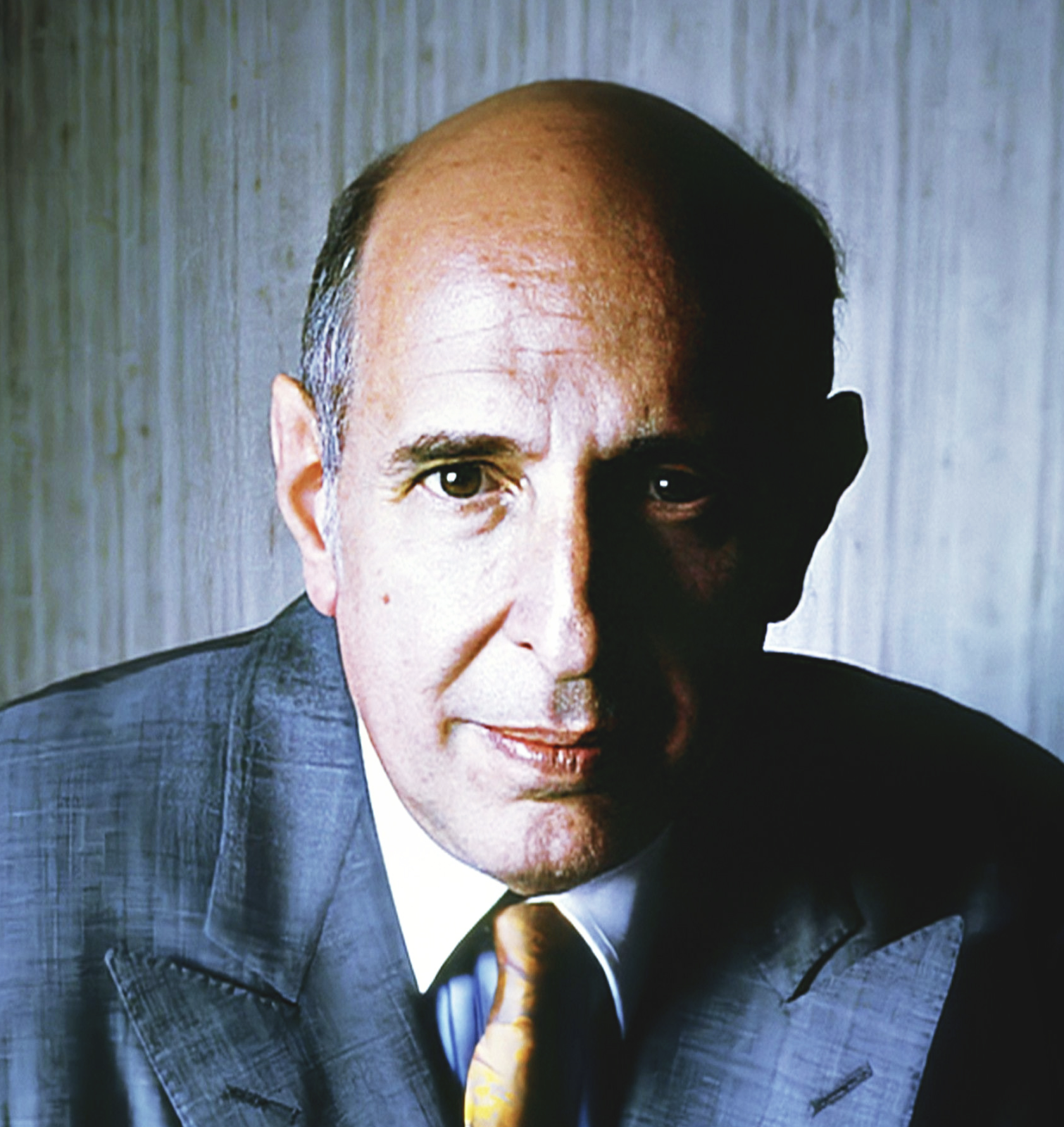
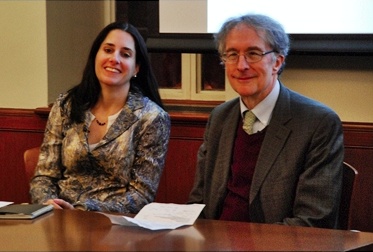
Guy Wallace is a Performance Analyst and Instructional Architect who has spent over 40 years in Learning & Development. With a background as a Journalist in the Navy and then later video production for training, moving into self-paced instruction at Motorola, then as a consultant Curriculum Architecture Design projects for major clients, his focus has always been on ‘performance’, in both analysis or design. His focus could be seen as lying at both the top and tail of learning design – an emphasis on up-front analysis with its eyes on end-point performance. He has published 17 books and many articles on the methods and need for a performance approach to learning, rather than just training. 

Performers not learners 

For Wallace, the culture of L&D is very classroom based, so analysis of real-world performance, in context, seems alien. They are more comfortable with didactic training, leaving transfer and performance to the learner. Customers usually see training as the sole solution to their problem, yet that problem is almost always improving needs and performance beyond learning.   

It is a mistake to focus immediately on content and topic solutions. Wallace reverses this to put actual performance centre stage in the learning process. He is single-minded in his belief that a focus on performance, along with thorough analysis of performance context, unlocks the right solution, so much so that he likes to call his target audience performers, rather than learners. 

Performance Analysis 

As a method he believes that rather than push back at training requests, one should let the analysis data guide the client’s decision making on whether to continue or not. 

This is why Guy believes in thorough up-front analysis. His approach drew from Geary Rummler on guidance and performance analysis focused on tasks and outputs. Also Tom Gilbert with his focus on accomplishments, worthy outputs, not just behaviours. Bob Mager provided the tools on performance analysis, gap analysis and the writing of behavioural objectives. Another huge influence is Richard E. Clark on cognitive task analysis and gap analysis. 

First one must understand whether the actual performance requires memorisation or reference to resources. Rather than automatically produce training, he believes that one should default to job aids, then job aids embedded in training, only then training to improve critical knowledge and skills.  

So ‘performance’ needs to be unpacked through Performance Analysis, ideally starting with a facilitated group process involving 8-12 master performers, also subject matter experts, along with supervisors and management and sometimes novice performers. They must work together to produce a performance model of ideal performance and then review what the gaps are, along with their causes for non-master performers. Identifying non-Knowledge/Skill obstacles is also required. The more that is uncovered through this form of analysis, the greater the eventual impact on performance. 

His four instructional analysis areas are:  

  1. Target audience 

  2. Performance (ideal & gaps)  

  3. Enabling knowledge and skills  

  4. Existing content assessments for potential reuse 

This last approach is to increase the reuse of client content, either “as is” or “after modification” to reduce costs and speed up performance improvement. 

This is accompanied by four means of learning: 

  1. Leave it to informal learning 

  2. Standalone job aids 

  3. Job aids embedded in training 

  4. Training for memorisation and honing of critical skills 

From this, his Modular Curriculum Development method, ADDIE in structure,  has six phases; Project kick-off, Analysis, Design, Development, Pilot, Revision and Release – with four gate review meetings with the clients. 

Influence

Guy has been pushing the performance approach for decades and now that it has come back into the fold, through the informal learning movement, 70:20:10, learning in the workflow and technology such as Learning Experience Platforms, he is seen as one of the gurus in this field. He is part of a movement that seeks to avoid unnecessary instruction. Technology that delivers workflow learning has also given Wallace’s approach new impetus, as job and performance aids are now common in LXP delivery, with its focus on search and pull, rather than push. 

Bibliography 

Wallace, G.W., 2021, Performance-based Lesson Mapping  

Wallace, G.W., 2011, The Curriculum Manager’s Handbook

Wallace, G.W., 2021, The 3 Ds of ThoughtFlow Analysis  

Wallace, G.W., 2020, Conducting Performance-Based Instructional Analysis  

Wallace, G.W., 2011, Analysis of Performance Competence Requirements

Wallace, G.W., 2011, Performance-based Curriculum Architecture Design

Wallace, G.W., 2011, Performance-based Modular Curriculum Development

Wallace, G.W., 2011, Developing Your Management Areas of Performance Competence

Wallace, G.W., 2011, From Training to Performance Improvement Consulting

Wallace, G.W., 2011, The Fifth Management Foci

Wallace, G.W., 2011, Lessons in Making Lemonade, Volume 1

Wallace, G.W., 2011, Lessons in Making Lemonade, Volume 2


Bloom (1930 - 1992) - Closing of the American Mind

Allan Bloom was a US philosopher and intellectual best known for his book Closing of the American Mind (1987) that defended the idea of studying the theoretical landscapes of the Great Books against the modernist tendency towards sociological studies. It was a bestseller at the time. A critic of American Higher Education, who saw the system as moving away from intellectual towards vulgar relativism and social pursuits, he saw education as a personal journey in understanding and engaging with the highest minds and thoughts, in an atmosphere of intellectual openness. Not to be confused with Harold Bloom, who also solidly defended the ‘Canon’ of great thought and literature.

Plato and Rousseau

He taught in Paris, translated Rousseau’s Emile (1978) and drew inspiration from what he called its natural companion, ‘the’ book on education, Plato’s Republic (1968), which he also translated. Education plays a central role in both books. Education of the child to adulthood is the theme of Emile and the education of citizens, warriors and rulers, the philosopher Kings, is central to the Republic. It also states that women and men should receive the same education. In Emile he saw what he had seen in Plato’s Republic, a higher calling through education.

The Closing of the American Mind

In Closing of the American Mind (1987) Bloom places blame at the feet of Nietzsche and Heidegger for producing cultural despair. Although admiring both, he thinks that the modern student body has come to resemble Nietzsche’s soulless ‘last man’. Nietzsche destroyed ideas of good and evil and replaced them with ‘values’, where reason is superficial. The descent into relativism, the lack of the higher ideals of philosophical and intellectual rigour, the decadence of modern music and the adoption of social pursuits, he sees as a form of closure of the mind. What culture needs is an open mind that can face up to these philosophers and take on the challenges they pose.

The book, as explained in the Preface, is written from the point of view of a ‘teacher’. He is a man of the Enlightenment, of reason and is loyal to the liberal education goals of teaching students to become autonomous thinkers, to discover themselves, others and the nature of the world. He sees a culture now obsessed with charisma, the language of relative values, the passions and emotions.

Universities, for Bloom, were no longer fit for purpose, that purpose being the education of open minds with the high ideal of searching for truth. What he finds is ubiquitous relativism among the young, not as a philosophical position but an indignant, moral principle that had arisen as a result of the individualism of the Enlightenment, Locke and Mill had created a path towards relativism. Into this vacuum came the emptiness of the 1960s and the degeneracy of the campus, then the emptiness of continental philosophy. Lofty intellectual goals were replaced over time by social and hedonistic activity, as well as moral and epistemological relativism. He wants society to resist interference from the left and right, to maintain a degree of separateness.

Critique

Although not calling himself a Conservative, Bloom was widely seen and attacked as being reactionary in his critique of Universities. His attachment to the Canon and Great Books, to many, seemed culturally bound and limited. The idea of a Liberal Arts education with this single minded goal is also narrowly drawn within Eurocentric cultural constraints. His elitism is also explicit.

Influence

Paglia described The Closing of the American Mind, cleverly, as the "the first shot in the culture wars" as it took sides against what Bloom saw as rather trivial interpretation of literature as ‘identity’ texts concerned with race and gender. He has received a second wave of followers, as the most recent rounds of the culture wars have erupted. In many parts it reads like a text for now rather than then, with its attack on the invasion of university life and aims by cultural relativism and political activism. The book, once again, seems relevant at a time when the University system is seen as being under threat from relativist theorists.

Bibliography

Bloom, A., 2008. Closing of the American mind. Simon and Schuster.

Bloom, A., 1978. The education of democratic man: Émile. Daedalus, pp.135-153.

Bloom, A. and Kirsch, A., 1968. The republic of Plato (Vol. 2). New York: basic books.


Kahneman & Tversky - System 1&2, cognitive bias

Described in the New York Times as the Lennon and McCartney of social science, they worked together on the psychology of judgement and decision-making. Daniel Kahneman, Emeritus Professor at Princeton, won the Nobel Prize for Economics in 2002, for questioning the role of the rational agent in economic models. He worked on this with Amos Tversky and said "
I feel it is a joint prize. We were twinned for more than a decade." Their work on the nature of thinking and cognitive biases has a significant impact on teaching and learning.

At the beginning of their careers, they worked in different branches of psychology: Kahneman studied vision, while Tversky studied decision-making, they both became experts in human error or biases. Thinking Fast and Slow (2011) is essential reading if you are interested in how bias works in the mind. The less academic book, The Undoing Project (2017) by Michael Lewis, explains it in a more readable form, telling the story of the relationship between Kahneman and Tversky, and their different contributions.

Thinking Fast and Slow

Kahneman refers to System 1 thinking as fast and immediate without reflection. This is the instinctive, emotional, unconscious reaction we have to learning experiences, identified as important by Damasio in learning. System 2 is slower, where you can rationalise, reflect, reinforce, recall and apply your learning. We have a mixture of fast and slow thinking in the learning process and the learning journeys we take, of achievement, success, confidence or having overcome difficulties in learning experiences. There is also a lot of cold, rational thinking, understanding and application that has to take place.

Kahneman is right to remind us of the existence of fast and slow ways of thinking but he also warns us against the bias and mistakes that System 1 emotional and instinctive thinking brings in its wake. He asks us to be aware of emotional and instinctive bias, not to see it always as a virtue. Emotion and vividness strongly influence what we do, so we must take this into account as both teachers and learners.

In the penultimate page of Kahneman’s book Thinking Fast and Slow (2011) he addresses this issue of combating emotion and bias by saying that… “System 1 is not readily educable”. The lesson is that we should not look to changing System 1, assuming you can eliminate fast and unconscious bias. His recommendation is clear. “The way to block errors in System 1 is simple in principle: recognise the signs that you are in a cognitive minefield, slow down, and ask for reinforcement  from System 2.” This is good advice, so how do we do this? Kahneman suggests that organisations use ‘process’ and ‘orderly procedures’, such as ‘useful checklists… reference forecasts… premortems’. In other words, much is to be gained through organisational checks and balances, not training based on unreliable, diagnostic tools. Training has a limited effect on changing biases, so focus on process and procedures.

Cognitive biases - anchors, frames and availability

To err is human as the mind is an evolved coping mechanism that has to deal with what is thrown at it, so it has limitations and is fallible. This matters when trying to understand why and how people make mistakes, an important issue in learning as avoiding and correcting mistakes is often the goal.

They showed that we often ‘anchor’ ourselves first, then make judgements based on that anchor. You anchor, for example, on the asking price when buying a house. Anchoring can be measured and it distorts judgements. This occurs in marking, where knowledge of previously high or low scores affects the marking at hand. Anchoring has even been shown to affect judgements by Judges on prison sentences. For Kaheneman and Tversky, anchoring results from fast System 1 thinking that provides memories (anchors) to the more rational System 2. and you are unaware that it happens. They call this WUSIATI - what you see is all there is. This priming is both useful and dangerous. Priming in learning can be used to push a consistent and true learning experience but also dangerous as it can distort learning.

We also ‘frame’ decisions and actions. Simply reworking a proposition affects how we react to it, especially on calculating risks. In addition, the ‘availability bias’ means the more readily you can call something to mind, the more available it is to you, making you attach a higher probability to it being true. The lesson here is that System 1 thinking, an instinctive process of which we are unaware, often just a feeling that we are correct, can be seriously misleading. This explains the fact that learners often ‘feel’ they have learnt things but when tested have not.

The ‘conjunction fallacy’ leads us to artificially inflate the truth of conjoined propositions: 

Linda is 31 years old, single, outspoken, and very bright. She majored in philosophy. As a student, she was deeply concerned with issues of discrimination and social justice, and also participated in anti-nuclear demonstrations.

Which is more probable?

   Linda is a bank teller.

   Linda is a bank teller and is active in the feminist movement.

People err towards the second. 

We also tend to avoid losses, called ‘loss aversion’, more than welcoming gains. We see this in the purchase of insurance, where people buy on the basis of an imagined and predicted loss, even when the cost of the premiums is greater than the cost of that loss. This is an important finding in both psychology and economics.

Such cognitive biases are part of human nature, even trained scientists and statisticians make simple bias errors. In pilot training, for example, it is important to accept that pilots will make errors under stress, and that you can’t ‘train’ this out of them. What Kahneman and Tversky did was to change pilot training forever, by refocusing on the cockpit decision making environment and encouraging criticism of the decisions from the person in charge.

Kahneman also discovered the Peak-End rule, where we remember the positives or negatives, not on the experience as a whole but based on its peaks and end. An important principle when designing learning experiences.

Influence

Kahneman and Tversky’s remarkable work on cognitive bias, as well as the characterisation of thinking in terms of fast and slow systems, have had huge influence on psychology, economics and many other domains, as well as learning theory and practice. Cognitive bias, for example, is now a theme of significance in the processes of teaching, learning and assessment. Unfortunately, their lessons have not been wholly adopted, as the focus is still on training towards changing such biases, rather than accepting that they exist and changing how we do things. It is still a phenomenon that is being seen as something to be corrected by training. This is where we may be going astray, in seeing biases as easily corrected through training. They are not. Their view is that emotion and instinct are poor masters and that reason must be used to counter their distorting confluence.

Bibliography

Lewis, M. (2017) The Undoing Project. Penguin

Kahneman, D. (2011) Thinking fast and Slow. Penguin


Thursday, November 04, 2021

Lakoff - embodied and emotional mind - man of metaphor

George Philip Lakoff is an American cognitive linguist and philosopher. He is a Professor of Cognitive Science and Linguistics at the University of California at Berkeley, where he has taught since 1972. Best known for his belief in the primary role of metaphor in language and thinking, he sees as the origins of much human belief and behavior in the physical and embodied mind. He has also published several books on political issues, including why people hold certain types of political beliefs, as well as the role of metaphor in political thought.

Embodied and emotional mind

Lakoff believes that all forms of cognition and reason are grounded in emotions that are embodied. The brain takes its cues from the body, how we as bodies are situated physically in the world, how we act and move. This determines how and often what we think. Thinking is shaped and limited by this embodiment. Ideas are in that sense physical. You therefore really learn about something when you care about it. The emotional component, that is there because the mind is embodied, determines what you are attentive to. 

Evidence for this comes from the relative absence of pure logical thinking and reason. When we think, it is much less clear and more complex, in terms of metaphor, often spatial and referenced to embodiment. Linguistically we often use figurative language, especially metaphor, and transfer this across to almost all subject domains in an attempt to understand, communicate and explain them. He also draws on evidence from neuroscience, motor and sensory functions.

Metaphor

Ideas are physical in the sense of taking place in our neural circuits. The classical view of reason as conscious and independent of emotion is wrong, as it is mostly unconscious. That unconscious activity shapes your thinking. Reason comes out of your physical and embodied experiences. 

We think in frames and metaphors. Teachers and learners play roles, these are frames. As teachers and learners we also communicate, largely through language which is deeply metaphorical, with varying layers of metaphor. Stock markets rise and fall. Language is rooted in space, time and action metaphors. Metaphors are not in language but thought. Students can move ‘up’ a class. Note that we have used the word ‘move’ as motion and up as a direction. We feel these metaphors as embodied, directional acts. There is also the physiology of emotions. With anger your heartbeat and skin temperature goes up. Imagination, remembering and dreaming use the same part of the brain that sees that same action or movement taking place in the real world. We store acts as canonical actions, like hammering a nail or kicking a football, in the brain. 

Teaching and learning

How does this relate to teaching and learning? Teaching is not the conveying of information, the idea that the teacher has ideas and uses language to convey or replicate those ideas in the minds of learners. It is a two way street, involving the exchange and imagining of sets of metaphors. This is important in teaching, as metaphors should then be used, carefully, to explain ideas to learners. Different types and levels of metaphorical and figurative language can be used to match the learners’ needs. Learners need metaphors to internalise. Learners can also use metaphor to assimilate ideas, explain them to themselves, generate ideas and help remember them.

He believes strongly in the importance of the arts in education and learning. Literature, music, poetry, crafts can all stimulate creative thinking. The arts nurture the ability to use and combine metaphors, improving understanding and memory. Creativity through visual and other sensory metaphors can be powerful tools in learning, using the imagination to create and therefore deeply process, understand and generate ideas.

Critique

Many regard Lakoff’s position on the role of metaphor as exaggerated, as it lacks the explanatory power to explain complex linguistic and cognitive phenomena. To use metaphors, some claim, one needs to have a grasp of the underlying reason, in other words they are illustrative and not fundamental. Many metaphors also seem to have been embedded in language by others, some may have been metaphors once but no longer, just known or memorised. There also seems to be slim evidence for ‘fixed’ frames. His cognitive relativism has been attacked by many, including Stephen Pinker as being unsubstantiated and inconsistent.

Neither is it clear that, even if metaphors are so ubiquitous, direct instruction could still use them fruitfully, even being understood and reused by the learner. It is also hard to see why art is so fundamentally and comonationally metaphorical or why it is always so prominently productive in learning. it may have no significant role in many other subjects.

Influence

Lakoff has probably had a more general and popular influence on the humanities than linguistics or psychology. It would be fair to say that his position is one of an outlier. Nevertheless, his work on the role of metaphor and the embodied mind has gained huge traction.

Bibliography

Lakoff, G. and Turner, M., 2009. More than cool reason: A field guide to poetic metaphor. University of Chicago press.

Lakoff, G. and Johnson, M., 2008. Metaphors we live by. University of Chicago press.

Lakoff, G. and Johnson, M., 1999. Philosophy in the flesh: The embodied mind and its challenge to western thought (Vol. 640). New York: Basic books.


Wednesday, November 03, 2021

Damasio & Immordino‐Yang - Role of emotion in learning

Antonio Damasio is a Portuguese-American neuroscientist. Science, he thinks, is now revealing the importance of emotions in cognition and consciousness. His research has shown that emotions play a central role in social cognition and decision-making. Also described as a neurobiologist, he brings biology and psychology together. This has interesting consequences for learning theory. He has collaborated with Mary Immordino‐Yang to explore the consequences of this emotional theory in learning theory. 

Rejects Descartes in favour of Spinoza

In Descartes’ Error: Emotion, Reason and the Human Brain (2005) Damasio rejects the Cartesian separation of body and mind, emotion and reason, using brain-damage cases and experimental evidence to show that rationality requires emotional input and emotions guide or produce biased behaviour and decision-making. He contrasts the mistaken, dualist, Cartesian error with another philosopher Spinoza, who he considers to have been on the right track in Looking for Spinoza: Joy, Sorrow, and the Feeling Brain (2003). Spinoza refused to separate mind and body and explored in detail the complex role of emotions and feelings. Damasio sees him as the precursor for his own theories of consciousness and being.

Consciousness

Consciousness has been called the hard problem. What it is and how it occurs is still a hugely controversial subject. For Damasio, neuroscience has started to reveal the secrets of this problem. What is it we lose when sleeping or under anaesthesia? It is more than internal images and sounds, there is also a sense of self. For Damasio we generate images of the self, as the mapping of the body through feelings. The autobiographical self is built upon past memories and uses imagination and language and allows us to move beyond our biology, through learning. 

Emotion and learning

In contrast to most psychological theories, with its emphasis on measurable cognition and models of memory, Damasio’s important insight is that emotion, although pushed to the side as an object of scientific study, is always in the loop of reason. When we think emotions and reason are enmeshed. It not only regulates our lives, it regulates learning. Emotion is therefore critical to learning and memory. Emotions play a powerful role in learning as motivators as all thinking and learning are inherently emotional, we can assume learners need to care about what they learn. Understanding motivation, leveraging emotional aspects of learning, is therefore essential to implement efficient learning.

We feel therefore we learn

Again neuroscience reveals connections between emotions, social functioning and decision making. For Damasio, all learning is subsumed within the processes of emotional thought. More than this, the emotion-related processes are necessary to guide and transfer knowledge and skills to the real world. He thinks an understanding of how this emotional rudder works will lead to innovation in learning design.

They take the theory of emotional thinking into the educational domain in Emotions, learning, and the brain: Exploring the educational implications of affective neuroscience (2015). For her, learners have complex sets of social emotions about other people’s minds, such as inspiration, awe, admiration, compassion, and gratitude.

Emotions matter, not just in acquiring knowledge and skills but also in transferring and applying them in real-world situations, as an emotional rudder that guides judgement, action and decision making. Emotions are needed for knowledge and skills to transfer, in particular, to novel situations and to real life.

They provide a biological and evolutionary account of emotions as an integral part of rational thought, therefore essential to social functioning. Emotion, in the sense of being part of the embodied, emotional learner has a ‘critical role in education’. Brain damaged patients were found to retain their knowledge and IQ but fail in social relationships. They use the metaphor of emotion, not being a toddler running around and breaking the china in a shop, but the shelf supporting hte china. 

Brain damaged patients also show that moral and social behaviour can fail if emotional input is absent.

In learning, what are taken as necessary and important cognitive functions - attention, memory, decision making, motivation, and social functioning - are deeply affected by emotion and seated in emotion. Reason rarely exists without emotion and the application of reason is always guided by emotion. Emotional thought is therefore the platform for learning.

The problem in learning is to focus too much on the rational domain, forgetting that it takes place in an emotionally embedded setting. It also leads to devaluing emotional self-regulation and the ability to apply what one learns to new situations and the real world.

Critique

Immordino‐Yang suggests that their findings argue for a more progressive approach to education. This is a view expressed by Lakoff, yet it is not clear that this is the case. It presupposes a view that the purpose of education is to produce critical thinkers, or as Immordino‐Yang says, scholars. This is a presupposition rather than conclusion. Education has many dimensions, and for some this includes the transfer of knowledge down through a culture, vocational learning, knowledge and a wide range of skills. Immordino‐Yang wants education to produce people that are suspiciously similar to academics. This may be far from progressive.

Influence

There is still a reluctance to recognise and accept that emotion plays a significant role in learning. Yet Damasio more than anyone, with help from Immordino‐Yang in learning, has greatly increased debate around the issue. Donald Norman wrote Emotional Design in 2010 but renewed interest in emotion has come from the interest in learning technology. Getting learners to say what confidence they have in answers has been a common feature for some time. More recently, where motivation, engagement and learning experience design have put more emphasis on the emotional component, interest in emotional design has come to the fore. In AI sentiment analysis has also allowed the harvesting of data on feelings and emotions.   

Bibliography

Immordino‐Yang, M.H. and Damasio, A., 2007. We feel, therefore we learn: The relevance of affective and social neuroscience to education. Mind, brain, and education.

Immordino-Yang, M.H., 2015. Emotions, learning, and the brain: Exploring the educational implications of affective neuroscience (the Norton series on the social neuroscience of education). WW Norton & Company.Damasio, A., 2018. The Strange Order of Things: Life, Feeling, and the Making of Cultures, Pantheon

Damasio, A., 2010. Self Comes to Mind: Constructing the Conscious Brain, Pantheon

Damasio, A., 2005. Descartes’ Error: Emotion, Reason and the Human Brain (2005)

Damasio, A., 2003. Looking for Spinoza: Joy, Sorrow, and the Feeling Brain, Harcourt

Damasio, A.,  1999. The Feeling of What Happens: Body and Emotion in the Making of Consciousness, Harcourt


Tuesday, November 02, 2021

Krathwohl (1921 – 2016) Affective learning taxonomy

David Reading Krathwohl was the Director of the Bureau of Educational Research at Michigan State University and held senior positions in several large research organisations. He worked alongside Benjamin Bloom and contributed to what is now known as Bloom’s taxonomy, in particular, the Affective taxonomy.

Bloom’s taxonomy is well known. Yet it was only the first of three taxonomies; 


Cognitive

Affective

Psychomotor. 


Bloom’s Part 1 on Cognitive taxonomy was published in 1956. Part 2, however, published by Krathwohl, came eight years later in 1964 and has been somewhat overlooked. He established, for affective learning, a similar hierarchy in the Cognitive domain. 

Affective learning

Affective learning is the emotional side of learning, how learners feel, involving learners’ attitudes, interests, beliefs and motivations. This is not just the feelings and emotions one experiences as one learns but also how those affective components are internalised and used by the learner to learn and move forward in their learning journey. Motivation is an important concept in affective learning.

Krathwohl proposed six levels of affective learning:

Characterization

Organization

Valuing

Responding

Receiving

This was seen as a hierarchical and cumulative process with increasing levels of internalisation.

Receiving

To receive is to be attentive and ready to read and listen to receive knowledge. This could be reading an article, paper or book. It could also involve listening to a podcast, lecture or watching a video.  

Responding

To respond is to actively respond, participate and engage in the learning process. This involves writing essays or assignments, problem-solving, presenting, asking questions and taking part in dialogue and discussion.

Valuing

To find value in one's learning is to be motivated to learn. Here one would reflect, express opinions and actively debate. You might initiate or demonstrate learning beyond participation.

Organization

To organise is to analyse, integrate and compare, ordering them according to priorities 

You might use graphs to analyse and compare, spreadsheets to classify and report, use conceptual mind-maps.

Characterization

To characterise is to control your outcomes and behaviours. You may take a critical and reflective approach, or get involved in group or team collaboration, perhaps justify and perform skills.

Cognitive domain

Although Bloom's original taxonomy consisted of six categories, when Krathwohl revised it in 2001, he put emphasis on the interaction between the cognitive and affective. This is important as it proved to be a fruitful approach in the work of Damasio and others.

With Lori Anderson he also reduced Bloom’s cognitive taxonomy down to four categories or knowledge dimensions:

Factual knowledge

Conceptual knowledge

Procedural knowledge

Metacognitive knowledge

For each of these four, smaller dimensions were identified. He also changed the cognitive processes to verbs and renamed Evaluation and Synthesis to Creation.

Critique

This Affective Taxonomy suffers from the same hierarchical rigidity as Bloom’s taxonomy in the Cognitive domain. It is too rigid and hierarchical. Some even argue that there is no real taxonomy of Affective learning as it emerges from or is part of the cognitive domain. Affective factors are also difficult to identify and assess as they involve feelings, attitudes, and beliefs, so ignored as something vague and unimportant. While there is recognition that feelings and emotions play a strong role in motivation and learning, it has yet to be seen as being on a par with its cognitive counterpart.

Influence

In truth Part 2 of Bloom’s Taxonomy, published eight years after Part 1, failed to get traction and affective learning remained fairly moribund for the next 50 years. There has been recent interest in Emotional design by Donald Norman and therefore the role of emotion in learning design. Technology has also led to an interest in sentiment analysis as a tool in interpreting learning data.


Bibliography

Krathwohl, D. R. (2002). A Revision of Bloom’s Taxonomy: An Overview. Theory Into Practice, 41(4), 212–218.

Anderson, L. W., & Krathwohl, D. R. (eds.) (2001). A taxonomy for learning, teaching, and assessing: A revision of Bloom's taxonomy of educational objectives. New York: Longman.

Krathwohl, D. R., Bloom, B. S., & Masia, B. B. (1964). Taxonomy of educational objectives: The classification of educational goals, Hand book II: Affective domain. New York: David Mckay Company Incorporated.

Bloom, B., Englehart, M. Furst, E., Hill, W., & Krathwohl, D. (1956). Taxonomy of educational objectives: The classification of educational goals. Handbook I: Cognitive domain. New York, Toronto: Longmans, Green