Showing posts sorted by relevance for query Freud. Sort by date Show all posts

Saturday, April 07, 2012

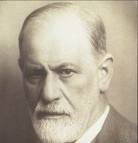
Freud (1856 – 1923) therapy culture lives despite being debunked


Freud (alongside Marx) is credited as being a theorist who practically shaped 20th century thought. He has had a deep and lasting influence in learning, not only through his theories on childhood development but also through psychoanalysis and therapy which in turn influenced counselling, coaching and mentoring.
Freud and childhood
Although he wrote no specific text on education, childhood development is, for Freud fundamental and formative. But his theory is pathological as adults inhibit, prohibit and repress desires and instincts, especially sexuality, in the face of reality. As he said, ‘The main aim of all education is to teach the child to control its instincts.’ The danger is in neuroses, the potential harmful effect of much parenting and education. We internalise and the ego becomes education’s enabler as it battles the id. It was then, through the ever more obscure theorising of Anna Freud, Melanie Klein and Lacan, among others, that Freudian theory was related directly to education and the convolutions of ‘psychopedagogy‘.
Therapy culture
The general rise of psychoanalytic and therapeutic culture led to the public vocabulary of self-esteem, counselling and syndromes entering the learning sphere in the 80s. The state, through education, took an interest in our internal, emotional lives of students. On the one hand this led to an increase in pastoral care in schools and an increase in the interest of parenting. However, many see this pathological view of education as having led to an obsessive interest in over-bearing parenting, the over-diagnosis of certain syndromes and the overuse of drugs on children perceived to be problematic.
Unconscious
Freud’s theories largely depend on and idea he did not create, the concept of the ‘unconscious’. The idea that the learning can be forgotten but still exist and be the cause of action from the unconscious mind was not unique to Freud. What Freud did was attribute reluctance by his patients to talk about sex, and other personal memories as evidence for a whole edifice of unconscious structures and processes.
Freud debunked
Little of Freud’s theories are now used in modern psychology. Popper’s critique of his theory on philosophical grounds and for failing to satisfy even minimal scientific standards prepared the way for serious scientific critiques. On the whole they show that Freud’s theories are poorly researched, based on single cases tiny samples and his own self-analysis. They claim his theories are speculative, subjective, self-fulfilling and not scientific in the sense that Freud claimed they were. Critiques have come from Grunbaum, Frederick Crews, Macmillan and Frank Cioffi. He has also come under serious attack from feminists for reducing women to ‘castrated’, reserve players in his psycho-sexual world.
Freud’s methods were far from science and at times downright dangerous. Emma Eckstein a bone surgically removed from her nose which led to suppuration for days. Another surgeon found that a gauze had been left in the wound and its removal almost killed the patient. Freud had diagnosed her as having a ‘nasal neurosis’ based on excessive masturbation and when he heard about her reaction to her months of pain and misery diagnosed this behaviour as hysteria.
In fact the scale of the debunking is astonishing. Little, if any, of Freud’s work has survived the scrutiny of later research. Macmillan in Freud Evaluated and many other texts have knocked off the theories one by one. The list of debunked theories include: Freudian slips, Free association, Id, Ego Superego, Repression, Regression, Projection, Sublimation, Denial, Transference (and counter-transference), Penis envy, Oedipus complex and Infantile sexuality.
Conclusion
Grayling puts his vast appeal down to his writing talent, the sense that readers are having deep secrets revealed, its appearance as a theory of human nature and, above all his focus on the taboo subject of sex.  However the Id, Ego and Superego hypotheses have, like most Freudian psychological concepts, been abandoned by serious, scientific psychology. It turned out to be a non-scientific  mess (despite Freud’s belief that it was science) which built a theoretical structure that was hugely speculative. It over-reached itself so far that little was salvageable other than a recognition that important processes do lie beneath consciousness, something that was not a Freudian discovery.
 Bibliography
Freud, S (1977). On sexuality: Three essays on the theory of sexuality and other works. Harmondsworth: Penguin Books.
Freud, S. (1952). Totem and taboo: Some points of agreement between the mental lives of savages and neurotics. New York: Norton
Freud, S. (2004). Civilization and its discontents. London: Penguin.
Freud, S (1965). New introductory lectures on psychoanalysis. New York: Norton.
Popper, K. R. (1966). The open society and its enemies. Princeton, N.J: Princeton University Press.
Macmillan, M. (1997).Freud evaluated: The completed arc. Cambridge, Mass: MIT Press
Crews, F. C. (1995).The memory wars: Freud's legacy in dispute. New York: New York Review of Books
Cioffi, F. (1998).Freud and the question of pseudoscience. Chicago: Open Court
Furedi, F. (2004) Therapy Culture. Routledge.
Grayling A.C. Scientist or storyteller?

Saturday, February 08, 2020

Freud (1856 – 1923) – Fraudulent origin of therapy culture

Freud (alongside Marx) is credited as being a theorist who practically shaped 20th century thought. He has had a deep and lasting influence in learning, not only through his theories on childhood development but also through psychoanalysis and therapy which in turn influenced counseling, coaching and mentoring.

Freud and childhood

Although he wrote no specific text on education, childhood development is, for Freud fundamental and formative. But his theory is pathological as adults inhibit, prohibit and repress desires and instincts, especially sexuality, in the face of reality. As he said, ‘The main aim of all education is to teach the child to control its instincts.’ The danger is in neuroses, the potential harmful effect of much parenting and education. We internalise and the ego becomes education’s enabler as it battles the id. It was then, through the ever more obscure theorising of Anna Freud, Melanie Klein and Lacan, among others, that Freudian theory was related directly to education and the convolutions of ‘psychopedagogy‘.

Therapy culture

The general rise of psychoanalytic and therapeutic culture led to the public vocabulary of self-esteem, counseling and syndromes entering the learning sphere in the 80s. The state, through education, took an interest in our internal, emotional lives of students. On the one hand this led to an increase in pastoral care in schools and an increase in the interest of parenting. However, many see this pathological view of education as having led to an obsessive interest in over-bearing parenting, the over-diagnosis of certain syndromes and the overuse of drugs on children perceived to be problematic.

Unconscious

Freud’s theories largely depend on an idea he did not create, the concept of the ‘unconscious’. The idea that learning can be forgotten, but still exist and be the cause of action from the unconscious mind, was not unique to Freud. What Freud did was attribute reluctance by his patients to talk about sex, and other personal memories as evidence for a whole edifice of unconscious structures and processes.

Freud debunked

Little of Freud’s theories are now used in modern psychology. Popper’s critique of his theory on philosophical grounds and for failing to satisfy even minimal scientific standards prepared the way for serious scientific critiques. On the whole they show that Freud’s theories are poorly researched, based on single cases tiny samples and his own self-analysis. They claim his theories are speculative, subjective, self-fulfilling and not scientific in the sense that Freud claimed they were. Critiques have come from Grunbaum, Frederick Crews, Macmillan and Frank Cioffi. He has also come under serious attack from feminists for reducing women to ‘castrated’, reserve players in his psycho-sexual world.
Freud’s methods were far from science and at times downright dangerous. Emma Eckstein had a bone surgically removed from her nose, which led to suppuration for days. Another surgeon found that a gauze had been left in the wound and its removal almost killed the patient. Freud had diagnosed her as having a ‘nasal neurosis’ based on excessive masturbation and when he heard about her reaction to her months of pain and misery diagnosed this behaviour as hysteria.
In fact the scale of the debunking is astonishing. Little, if any, of Freud’s work has survived the scrutiny of later research. Macmillan in Freud Evaluated and many other texts have knocked off the theories one by one. The list of debunked theories include: Freudian slips, Free association, Id, Ego Superego, Repression, Regression, Projection, Sublimation, Denial, Transference (and counter-transference), Penis envy, Oedipus complex and Infantile sexuality.

Influence

Grayling puts his vast appeal down to his writing talent, the sense that readers are having deep secrets revealed, its appearance as a theory of human nature and, above all his focus on the taboo subject of sex.  However the Id, Ego and Superego hypotheses have, like most Freudian psychological concepts, been abandoned by serious, scientific psychology. It turned out to be a non-scientific mess (despite Freud’s belief that it was science) which built a theoretical structure that was hugely speculative. It over-reached itself so far that little was salvageable other than a recognition that important processes do lie beneath consciousness, something that was not a Freudian discovery.

A narrative that underlies not the psychological but psychoanalytic, even the psychiatric input to learning, whether happiness, wellness or happiness, is the therapeutic narrative that goes back to Freud. This narrative draws on a Freudian view of the world that we are flawed beings and sees almost everyone in need of therapy.

This narrative refuses to die and has morphed from fairly benign mentoring to more intrusive counseling and now onto wellness, happiness and mindfulness Descriptive definitions suddenly become prescriptive techniques to be applied to all. Just as the underlying Freudian theory fades (almost nothing has survived) this narrative, the therapeutic narrative, described well by Frank Furedi in Therapy Culture (2004) gets resurrected. It has even resulted in rather foolish attempts by HR to read our unconscious, namely unconscious bias.

Bibliography

Freud, S (1977). On sexuality: Three essays on the theory of sexuality and other works. Harmondsworth: Penguin Books.
Freud, S. (1952). Totem and taboo: Some points of agreement between the mental lives of savages and neurotics. New York: Norton
Freud, S. (2004). Civilization and its discontents. London: Penguin.
Freud, S (1965). New introductory lectures on psychoanalysis. New York: Norton.
Popper, K. R. (1966). The open society and its enemies. Princeton, N.J: Princeton University Press.
Macmillan, M. (1997). Freud evaluated: The completed arc. Cambridge, Mass: MIT Press
Crews, F. C. (1995).The memory wars: Freud's legacy in dispute. New York: New York Review of Books
Cioffi, F. (1998). Freud and the question of pseudoscience. Chicago: Open Court
Furedi, F. (2004) Therapy Culture. Routledge

Grayling A.C. Scientist or storyteller?

Monday, January 22, 2007

Freud a fraud?

I posted an attack on the scientific validity NLP in November last year and am still receiving comments, although they’re getting weirder by the day. This led me to some further reading on psychotherapy and Freud, as it wasn’t clear to me whether any of Freud’s theories are now used in modern psychology. I was familiar with Popper so started with Polayni and Nagel. All three show that Freud’s theories are largely self-fulfilling and not scientific in the sense that Freud claimed they were. So far so good. Then I tried Grunbaum which led me to Macmillan and Frank Cioffi.

What I wasn’t prepared for was the sheer scale of the debunking. Little, if any, of Freud’s work has survived the scrutiny of later research, either of Freud’s methods and data or the phenomena themselves when examined with scientific rigour. The list of debunked theories include:

Freudian slips
Free association
Id, ego and superego
Repression
Regression
Projection
Sublimation
Denial
Transference (and counter-transference)
Penis envy
Oedipus complex
Infantile sexuality

In short, Freudian psychoanalysis has been abandoned by serious, scientific psychology. It turned out to be a non-empirical mess from which nothing was salvageable. Of course, I could just be suffering from any combination of the above conditions.

Sunday, April 08, 2012

Erikson (1902 – 1994) lifelong identity crises, 8 stages


Eric Erikson a German psychoanalyst and psychologist, spent most of his working life in the US. He expanded Freud’s childhood developmental theory, well beyond the first few years of life, into a lifelong development theory of identity, with an emphasis on the adolescent ‘identity crisis’ and the role of the ego.
Eight stages
Inessence, Eriskson’s advice is that internal conflicts occur at each of his eight stages in life. If one fails to resolve the crises that arise, they can adversely affect the later stages in one’s life.
The Oral Sensory Stage, requires the development of trust through the maternal relationship and if this bond is not fulfilled may lead to a sense of rejection or worthlessness.
Autonomy develops as we go through the ‘terrible two’s and we affirm our ability to defy, walk and talk, with an emphasis on toilet training. Here we overcome shame.
Pre-school involves initiative overcoming guilt through play, imagination and mimicking adults.
At school, the child must develop self-identity and self-worth within the context of a new environment, through industry, to overcome a sense of inferiority. Education kicks in here as the teacher must, like the parent, engender a sense of worth.
The big one, where roles are confused until identity is established. The tables are turned as we have to rely on ourselves, rather than others for our identity. This can lead to idealism at the expense of realism.
We’re into adulthood where intimacy overcomes isolation through love, friendship and possibly marriage.
One develops a career and purpose in life, as well as taking on the role of a parent and carer. One’s sense of purpose can stagnate into regret or be generative.
One looks back with either a sense of disappointment, even despair, or a positive outlook with a sense of worth and wisdom, as one face s death.
Criticism
He knew Freud’s daughter Anna and took Freud’s basic theory, modified it, with more emphasis on the ‘ego’ and less on sexuality. But Erikson’s schema suffers from being primarily descriptive, with little evidence to back up the underlying pairs of conflicting forces. His evidence is loose and anecdotal, relying too much looking at the lives of a few famous people from the past. His paired conflicts have been criticised as being oversimplifications, dualist in nature, if not moralistic in tone. There is also doubt about the age ranges and whether all of this occurs in such a rigid, sequential order.
Conclusion
Erikson has been influential not only among early years’ practitioners but also among those who study adolescence. ‘Identity crisis’ has entered our language as a general term for confusion about the self. Nevertheless, in the end, it is a reframing of the Freudian concept of the ‘ego’, driven forward by dualist conflict. What Erikson does is draw attention to the different needs of people at roughly different stages of their lives. Education and learning are heavily influenced by internal conflicts and external social pressures. Whether we need Erikson’s precise staged, theoretical framework is another question.
Bibliography

Erikson E. (1950) Childhood and Society
Erikson E. (1958) Young Man Luther. A Study in Psychoanalysis and History
Erikson E. (1968) Identity: Youth and Crisis
Erikson E. (1969) Gandhi's Truth: On the Origin of Militant Nonviolence
Erikson E. Kivnick H. (1986) Vital Involvement in Old Age
Erikson E. Erikson J.M. (1987) The Life Cycle Completed
Coles, R. (1970) Erik H. Erikson: The Growth of His Work. Boston: Little, Brown & Co.

Sunday, November 14, 2021

Erikson (1902 – 1994) - Identity crises

Eric Erikson, a German psychoanalyst and psychologist, spent most of his working life in the US. He expanded Freud’s childhood developmental theory, well beyond the first few years of life, into a lifelong development theory of identity, with an emphasis on the adolescent ‘identity crisis’ and the role of the ego.

Eight stages

In essence, Erikson’s advice is that internal conflicts occur at each of his eight stages in life. If one fails to resolve the crises that arise, they can adversely affect the later stages in one’s life.
Stage 1: Trust vs. Mistrust (Oral-sensory, Birth-0-2)
The Oral Sensory Stage, requires the development of trust through the maternal relationship and if this bond is not fulfilled may lead to a sense of rejection or worthlessness.
Stage 2: Autonomy v Shame & Doubt (Muscular-Anal, 2-4)
Autonomy develops as we go through the ‘terrible two’s and we affirm our ability to defy, walk and talk, with an emphasis on toilet training. Here we overcome shame.
Stage 3: Initiative v Guilt (Locomotor-Genital, Preschool, 4-5)
Pre-school involves initiative overcoming guilt through play, imagination and mimicking adults.
Stage 4: Industry v Inferiority (Latency, 5-12)
At school, the child must develop self-identity and self-worth within the context of a new environment, through industry, to overcome a sense of inferiority. Education kicks in here as the teacher must, like the parent, engender a sense of worth.
Stage 5: Identity v Role Confusion (Adolescence, 13-19)
The big one is where roles are confused until identity is established. The tables are turned as we have to rely on ourselves, rather than others for our identity. This can lead to idealism at the expense of realism.
Stage 6: Intimacy v Isolation (Young adulthood, 20-24, or 20-40)
We’re into adulthood where intimacy overcomes isolation through love, friendship and possibly marriage.
Stage 7: Generativity v Stagnation (Middle adulthood, 25-64, or 40-64)
One develops a career and purpose in life, as well as taking on the role of a parent and carer. One’s sense of purpose can stagnate into regret or be generative.
Stage 8: Ego Integrity v Despair (Late adulthood, 65-death)
One looks back with either a sense of disappointment, even despair, or a positive outlook with a sense of worth and wisdom, as one face s death.

Criticism

He knew Freud’s daughter Anna and took Freud’s basic theory, modified it, with more emphasis on the ‘ego’ and less on sexuality. But Erikson’s schema suffers from being primarily descriptive, with little evidence to back up the underlying pairs of conflicting forces. His evidence is loose and anecdotal, relying too much looking at the lives of a few famous people from the past. His paired conflicts have been criticised as being oversimplifications, dualist in nature, if not moralistic in tone. There is also doubt about the age ranges and whether all of this occurs in such a rigid, sequential order.
Working with Benjamin Spock, he played a role in promoting the idea that children were subject to Freudian influences that mistrust, shame and guilt. This deficit model was to introduce therapeutic tendencies into education and training that last to this day. With the rise of therapeutic solutions, such as mindfulness and unconscious bias, we see a concern with mental deficits that see both children and adults as pathological – in a sense needing cured from their normal thinking and behavior. Judith Harris, in a piece of definitive research showed that this approach was seriously flawed. Identity is not defined by internal conflicts but by genetics, peer pressure and some parental influence. His ‘identity’ theory, in effect, had an identity crisis when it came up against the empirical evidence.

Influence

Erikson has been influential not only among early years’ practitioners but also among those who study adolescence. ‘Identity crisis’ has entered our language as a general term for confusion about the self. Nevertheless, in the end, it is a reframing of the Freudian concept of the ‘ego’, driven forward by dualist conflict. What Erikson does is draw attention to the different needs of people at roughly different stages of their lives. Education and learning are heavily influenced by internal conflicts and external, social pressures. Whether we need Erikson’s precise staged, theoretical framework is another question.

Bibliography

Erikson E. (1950) Childhood and Society
Erikson E. (1958) Young Man Luther. A Study in Psychoanalysis and History
Erikson E. (1968) Identity: Youth and Crisis
Erikson E. (1969) Gandhi's Truth: On the Origin of Militant Nonviolence
Erikson E. Kivnick H. (1986) Vital Involvement in Old Age
Erikson E. Erikson J.M. (1987) The Life Cycle Completed
Coles, R. (1970) Erik H. Erikson: The Growth of His Work. Boston: Little, Brown & Co.

Wednesday, February 05, 2020

Erikson (1902 – 1994) - Identity crises...

Eric Erikson, a German psychoanalyst and psychologist, spent most of his working life in the US. He expanded Freud’s childhood developmental theory, well beyond the first few years of life, into a lifelong development theory of identity, with an emphasis on the adolescent ‘identity crisis’ and the role of the ego.

Eight stages

In essence, Erikson’s advice is that internal conflicts occur at each of his eight stages in life. If one fails to resolve the crises that arise, they can adversely affect the later stages in one’s life.
Stage 1: Trust vs. Mistrust (Oral-sensory, Birth-0-2)
The Oral Sensory Stage, requires the development of trust through the maternal relationship and if this bond is not fulfilled may lead to a sense of rejection or worthlessness.
Stage 2: Autonomy v Shame & Doubt (Muscular-Anal, 2-4)
Autonomy develops as we go through the ‘terrible two’s and we affirm our ability to defy, walk and talk, with an emphasis on toilet training. Here we overcome shame.
Stage 3: Initiative v Guilt (Locomotor-Genital, Preschool, 4-5)
Pre-school involves initiative overcoming guilt through play, imagination and mimicking adults.
Stage 4: Industry v Inferiority (Latency, 5-12)
At school, the child must develop self-identity and self-worth within the context of a new environment, through industry, to overcome a sense of inferiority. Education kicks in here as the teacher must, like the parent, engender a sense of worth.
Stage 5: Identity v Role Confusion (Adolescence, 13-19)
The big one is where roles are confused until identity is established. The tables are turned as we have to rely on ourselves, rather than others for our identity. This can lead to idealism at the expense of realism.
Stage 6: Intimacy v Isolation (Young adulthood, 20-24, or 20-40)
We’re into adulthood where intimacy overcomes isolation through love, friendship and possibly marriage.
Stage 7: Generativity v Stagnation (Middle adulthood, 25-64, or 40-64)
One develops a career and purpose in life, as well as taking on the role of a parent and carer. One’s sense of purpose can stagnate into regret or be generative.
Stage 8: Ego Integrity v Despair (Late adulthood, 65-death)
One looks back with either a sense of disappointment, even despair, or a positive outlook with a sense of worth and wisdom, as one face s death.

Criticism

He knew Freud’s daughter Anna and took Freud’s basic theory, modified it, with more emphasis on the ‘ego’ and less on sexuality. But Erikson’s schema suffers from being primarily descriptive, with little evidence to back up the underlying pairs of conflicting forces. His evidence is loose and anecdotal, relying too much looking at the lives of a few famous people from the past. His paired conflicts have been criticised as being oversimplifications, dualist in nature, if not moralistic in tone. There is also doubt about the age ranges and whether all of this occurs in such a rigid, sequential order.
Working with Benjamin Spock, he played a role in promoting the idea that children were subject to Freudian influences that mistrust, shame and guilt. This deficit model was to introduce therapeutic tendencies into education and training that last to this day. With the rise of therapeutic solutions, such as mindfulness and unconscious bias, we see a concern with mental deficits that see both children and adults as pathological – in a sense needing cured from their normal thinking and behavior.

Influence

Erikson has been influential not only among early years’ practitioners but also among those who study adolescence. ‘Identity crisis’ has entered our language as a general term for confusion about the self. Nevertheless, in the end, it is a reframing of the Freudian concept of the ‘ego’, driven forward by dualist conflict. What Erikson does is draw attention to the different needs of people at roughly different stages of their lives. Education and learning are heavily influenced by internal conflicts and external, social pressures. Whether we need Erikson’s precise staged, theoretical framework is another question.

Bibliography

Erikson E. (1950) Childhood and Society
Erikson E. (1958) Young Man Luther. A Study in Psychoanalysis and History
Erikson E. (1968) Identity: Youth and Crisis
Erikson E. (1969) Gandhi's Truth: On the Origin of Militant Nonviolence
Erikson E. Kivnick H. (1986) Vital Involvement in Old Age
Erikson E. Erikson J.M. (1987) The Life Cycle Completed
Coles, R. (1970) Erik H. Erikson: The Growth of His Work. Boston: Little, Brown & Co.

Sunday, July 06, 2014

6 reasons why we don't need ‘mentors’

I’ve never had a mentor. I don’t want a mentor. I don’t like mentoring. I know this is swimming against the tide of liberal orthodoxy but I value liberal values more than I value fads, groupthink or orthodoxy. But there’s many reasons why I’m suspicious of mentoring.

1. Fictional constructs
Mentor was a character in Homer’s The Odyssey and it is often assumed that his role was one of a guiding, experienced hand for his son and family. This is false. Mentor was simply an old acquaintance, ill-qualified play a protective role to his family, and worse, turned out to be a patsy for a hidden force, the God Athena. A similar tale has unfolded in recent times, with mentoring being revived on the back of late 19th century psychoanalytic theory, where the original theory has been abandoned but the practice upon which it is based survives.

There is another later work of fiction that resurrected the classical model as a source for the word ‘mentor’ in education - Fenelon’s Les Adventures de Telemaque (1699). This is a tale about limiting the excesses of a king but it did reinforce the presence of the word ‘mentor’ in both French, then English. Yet Mentor in this ponderous novel is prone to didactic speeches about how a king should rule (aided by the aristocracy), hardly the egalitarian text one would expect to spark a revolution in education. Interestingly, it pops up again as one of two books given to Emile in the novel of the same name, by Rousseau.

2. Psychoanalytic veneer
Mentoring came out of the psychanalytic movement in education with Freud and Rogers. Nothing survives of Freud’s theories on the mind, education, dreams, humour or anything else for that matter. But Rogers is different. His legacy is more pernicious, like pollution seeping into the water table. His work has resulted in institutional practice that has hung around many decades after the core theories have been abandoned. We need to learn how to abandon practice when the theories are defunct.

3. Mentoring is a trap
As Homer actually showed, one person is not enough. To limit your path, in work or life, to one person is to be feeble when it comes to probability. Why choose one person (often that person is chosen for you) when there are lots of good people out there. It stands to reason that a range of advice on a range of diverse topics (surely work and life are diverse) needs a range of expertise. Spread your network, speak to a range and variety of people. Don’t get caught in one person’s spider’s web. Mentoring is a trap.

4.  People, social media, books etc. are better
You don’t need a single person, you need advice and expertise. That is to be found in a range of resources. Sure, a range of people can do the job and hey - the best write books. Books are cheap, so buy some of the best and get reading. You can do it where and when you want and they’re written by the world’s best, not just the person who has been chosen in your organisation or a local life coach. And if you yearn for that human face, try video – TED and YouTube – they’re free! I’d take a portion of the training budget and allow people to buy from a wide reading list, arther than institute expensive mentoring programmes. Then there's socil media a rich source of advice and guidance provided daily. This makes people more self-reliant, rather than being infantalised.

5. Absence of proof
Little (1990:297) warned us, on mentoring, that, “relative to the amount of pragmatic activity, the volume of empirical enquiry is small [and]... that rhetoric and action have outpaced both conceptual development and empirical warrant.”  This, I fear, is not unusual in the learning world. Where such research is conducted the results are disappointing. Mentors are often seen as important learning resources in teacher education and in HE teaching development. Empirical research shows, however, that the potential is rarely realised (Edwards and Protheroe, 2003: 228; Boice, 1992: 107). The results often reveal low level "training" that simply instruct novices on the "correct" way to teach (Handal and Lauvas, 1988: 65; Hart-Landsberg et al., 1992: 31). Much mentoring has been found to be rather shallow and ineffective (Edwards, 1998: 55-56).

6. Fossilised practice
Practice gets amplified and proliferates through second-rate train the trainer and teacher training courses, pushing orthodoxies long after their sell-by, even retirement, date. Mentoring has become a lazy option and alternative for hard work, effort, real learning and reflection. By all means strive to acquire knowledge, skills and competences, but don’t imagine that any of this will come through mentoring.

Conclusion
I know that many of you will feel uncomforted by these arguments but work and life are not playthings. It is your life and career, so don’t for one minute imagine that the HR department has the solutions you need. Human resources is there to protect organisations from their employees, so is rarely either human or resourceful. Stay away from this stuff if you really want to remain independently human and resourceful. Get a life, not a mentor.


English translation of Les Adventures de Telemaque https://archive.org/stream/adventuresoftele00fene#page/41/mode/thumb
Little, J.W. (1990) ‘The Mentor Phenomenon and the Social Organisation of Teaching’, in: Review of Research in Education. Washington D.C: American Educational Research Association.
Warhurst R (2003)Learning to lecture Paper presented at the British Educational Research Association Annual Conference, Heriot-Watt University, Edinburgh.

Thursday, July 25, 2024

Resilence training - where it came from and why it went so badly wrong


My bullshit word for the last couple of years has been 'Resilience'. It is what David Graeber, in his brilliant book, Bullshit Jobs, called making shit up to make money from assumed misery. If you have to attend a hokey conference or conference talk on 'Resilience' you don't and will never have it... to be fair, if you make it through a Resilience training course that should suffice!

Workforce learning professionals are in a state of perpetual angst. They feel they are not listened to and don’t have a voice at the top table. This is true HR and L&D have never had any sustainable influence to board level. Hardly surprising when we deliver courses on things neither the business nor its employees ever asked for. I have never, ever heard any normal person say what they need is a ‘course’ on ‘resilience’. It is something supplied by L&D not demanded by organisations, a chimera to make us look caring and important. This has been a worrying trend in workplace learning the delivery of courses based on abstract nouns that no one ever asked for. We supply things we think are relevant, rather than look at what the business demands in terms of goals.

Having beaten into people that they have all sorts of mental deficits, through billions spent on DEI, ESG and wellbeing training courses and initiatives, thrashing employees like piñatas, telling them they are weak and have deficits that need cured by courses. To remedy this, apart from the endless groundhog debates on the future of L&D at conferences, we come up with abstract concepts around which conference sessions and courses have to be built. The current obsession is with ‘Resilience’. These are too often bouts of over-earnest classroom courses or weird e-learning. All of this despite the overwhelming evidence, over many years, that this does not work, it continues. A ‘roll of the eyes’ is the most common reaction when you ask people what they think of all this.

So, as HR has turned into defending the organisation against itself, they then had the temerity to demand that we all need to man and woman up – we need more resilience. It’s like slapping people repeatedly on the face then them telling them to ‘pull themselves together’ before carrying on with the slapping. If your organisation is so dysfunctional that you need to train people to deal with that dysfunction - that speaks volumes about your organisation. Training people to deal with dysfunction is not going to fix it.

Curious history of ‘Resilience’ training

Resilience has deep roots in psychiatry, especially Freud and his daughter Anna Freud, on how individuals cope with trauma and adversity, who I discussed in detail in a recent podcast and whose theories are literally flights of fancy. also Bowlby and Erikson (wrong on most counts) pushed this forward in the 50s and 60s. But it was in the 70s and 80s, that Emmy Werner and Ruth Smith did longitudinal studies on children in adverse conditions. Their work, especially the Kauai Longitudinal Study, highlighted the factors that contributed to resilience in at-risk and sick children.

In training, resilience emerged from the positive psychology movement in the late 1990s when Martin Seligman emphasised the importance of building strengths and well-being, rather than just treating mental illness. Also discussed in detail in this podcast. He backtracked somewhat and more recent evidence shows that the training and wellbeing programmes are not effective at all.

Antifragility 

Modern Resilience training is a mishmash of all of this but there is one book that people thought promoted resilience but was in fact an attack on resilience and resilience training. That book was Antifragile: Things That Gain from Disorder by Nassim Nicholas Taleb. 

Taleb was a derivatives trader then hedge-fund manager and anyone who has actually read the book will know that he hates resilience training. “The fragile want tranquility, the antifragile grows from disorder, and the robust doesn’t care too much.” This is a man who is fiercely critical of certain elites and experts, particularly those he believes are detached from real-world consequences and has resonated resonate with populist sentiments.

He defines resilience as a mistake in that it promotes the ability to resist shocks but stay the same. A resilient system can withstand stress without significant damage but does not necessarily improve from the experience. By contrast, antifragile systems thrive and grow stronger in the face of stress and adversity. Taleb advocates for antifragility over mere resilience because antifragile systems benefit from disorder and challenges.

Taleb argues that resilience training, focuses on helping individuals or systems return to their baseline state after a disruption, an approach that misses the opportunity to leverage stressors for growth and improvement. It creates a false sense of security encouraging individuals and organizations to believe they are adequately prepared for challenges when, in fact, they are only prepared to endure them, not to improve from them.

We need to deliberate expose people to manageable levels of stress and variability to stimulate to build stronger, more adaptable capabilities. People need to continually seek out challenges that push their boundaries and enhance their capabilities so they can survive disruptions but actively using them as catalysts for innovation, embracing and leveraging stressors and challenges to achieve growth and improvement. In practice he doesn’t like HR, L&D as they are part of the bureaucracy of institutions promoting rules and rigidity, fixed outlooks and fixed career paths. Individuals should rather seek out challenges, embrace uncertainty and new experiences that push their boundaries and expand their capabilities.

Conclusion

And so we end up with a hotchpotch of stuff wrapped up into a disjointed PowerPoint and call it Resilience training. We need to stop building empires around ‘big words’ and get back to training competences to solve the skills shortages that all employers report.


Monday, November 26, 2018

Do we really need all of this 'mentoring' malarkey’?

I’ve never had a mentor. I don’t want a mentor. I don’t much like mentoring. I know this is swimming against the tide of liberal orthodoxy but I value liberal values more than I value fads, groupthink or orthodoxy. Don't mind people doing it but there are many reasons why I’m suspicious of mentoring.
1. Fictional constructs
Mentor was a character in Homer’s The Odyssey and it is often assumed that his role was one of a guiding, experienced guide for his son and family. This is wrong. Mentor was simply an old acquaintance, ill-qualified to play a protective role to his family, and worse, turned out to be a patsy for a hidden force, the God Athena. A similar tale has unfolded in recent times, with mentoring being revived on the back of late 19thcentury psychoanalytic theory, where the original theory has been abandoned but the practice upon which it is based survives.
There is another later work of fiction that resurrected the classical model as a source for the word ‘mentor’ in education, Fenelon’s Les Adventures de Telemaque(1699). This is a tale about limiting the excesses of a king and reinforced the presence of the word ‘mentor’ in both French, then English. Yet Mentor, in this ponderous novel, is prone to didactic speeches about how a king should rule (aided by the aristocracy), hardly the egalitarian text one would expect to spark a revolution in education. Interestingly, it pops up again as one of two books given to Emile in the novel of the same name, by Rousseau.
2. Psychoanalytic veneer
Mentoring came out of the psychoanalytic movement in education, through Freud and Rogers. Nothing survives of Freud’s theories on the mind, education, dreams, humour or anything else for that matter. But Rogers is different. His legacy is more pernicious, as his work has resulted in institutional practice that has hung around many decades after the core theories have been abandoned. We need to learn how to abandon practice when the theories are defunct.
3. Mentoring is a one person trap
As Homer actually showed, one person is not enough. To limit your path in work or life to one person is to be feeble when it comes to probability. Why choose one person (often that person is chosen for you) when there are lots of good people out there? It stands to reason that a range of advice on a range of diverse topics (surely work and life are diverse) needs a range of expertise. Spread your network, speak to a range and variety of people. Don’t get caught in one person’s spider’s web. Mentoring is this sense is a singular trap.
4.  People, social media, books etc. are better
You don’t need a single person, you need advice and expertise. That is also to be found in a range of resources. Sure, a range of people can do the job and the best write books. Books are cheap, so buy some of the best and get reading. You can do it where and when you want and they’re written by the world’s best, not just the person who happens to be chosen in your organisation or a local life coach. And if you yearn for that human face, try video – TED and YouTube – they’re free! I’d take a portion of the training budget and allow people to buy from a wide reading list, rather than institute expensive mentoring programmes. Then there's social media, a rich source of advice and guidance provided daily. This makes people more self-reliant, rather than being infantalised. Twitter also has strong benefits in CPD.
5. Absence of proof
Little (1990) warned us, on mentoring, that, “relative to the amount of pragmatic activity, the volume of empirical enquiry is small [and]... that rhetoric and action have outpaced both conceptual development and empirical warrant.”  This, I fear, is not unusual in the learning world. Where such research is conducted, the results are disappointing. Mentors are often seen as important learning resources in teacher education and in HE teaching development. Empirical research shows, however, that the potential is rarely realized, see Edwards and Protheroe (2003) and Boice (1992). The results often reveal low level "training" that simply instruct novices on the "correct" way to teach Handal and Lauvas (1988), Hart-Landsberg et al., (1992). Indeed, much mentoring has been found to be rather shallow and ineffective Edwards, (1998).
6. Fossilised practice
Practice gets amplified and proliferates through second-rate train the trainer and teacher training courses, pushing orthodoxies long after their sell-by, even retirement, date. Mentoring has sometimes become a lazy option and alternative for hard work, effort, real learning and reflection. By all means strive to acquire knowledge, skills and competences, but don’t imagine that any of this will come through mentoring in any efficient manner.
7. Over-formalised
Mentoring is what parents, grandparents and older members of the community used to do, and well. I’m all for the passing down of learning and wisdom, but when it gets formalized into specific people, with supposedly strong ‘mentoring’ skills, I have my doubts. By all means encourage people to share, especially those with experience but don’t kill the human side of this with an over-formalised process.
Conclusion: get a life, not a coach
I know that many of you will feel uncomforted by these arguments but work and life are not playthings. It is your life and career, so don’t for one minute imagine that the HR department has the solutions you need. Human resources is there to protect organisations from their employees, rarely either human or resourceful. Stay away from this stuff if you really want to remain an independent thinker.
Bibliography
English translation of Les Adventures de Telemaque https://archive.org/stream/adventuresoftele00fene#page/41/mode/thumb
Boice (1992)Lessons learned about mentoring https://onlinelibrary.wiley.com/doi/abs/10.1002/tl.37219925007
Edwards and Protheroe (2003)Learning to See in Classrooms: What are student teachers learning about teaching and learning while learning to teach in schools? British Educational research Journal.
Handal and Lauvas (1988) Promoting Reflective Teaching
Little, J.W. (1990) ‘The Mentor Phenomenon and the Social Organisation of Teaching’, in: Review of Research in Education. Washington D.C: American Educational Research Association.
Warhurst R (2003) Learning to lecture Paper presented at the British Educational Research Association Annual Conference, Heriot-Watt University, Edinburgh.http://www.leeds.ac.uk/educol/documents/00003330.htm