Showing posts sorted by relevance for query rogers. Sort by date Show all posts

Monday, February 10, 2020

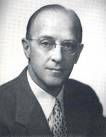
Rogers (1902 - 1987) - Teacher as facilitator and therapist…

Carl Rogers is known as the founder of 'client-centred' therapy and his promotion of counseling. He also had a keen interest in education and his therapy-oriented methods became widely adopted in education and training through coaching, mentoring and other student-centred, Socratic techniques. Roger’s influence can be felt everywhere in modern learning with from open questioning techniques by tutors to counseling itself in schools and the workplace.

Teaching as facilitation

Influenced by Dewey, he emphasised the relationship between learner and facilitator. As early as 1951 Rogers had looked at 'student-centred teaching' in Client-Centered Therapy (1951), where he claimed that teaching is really ‘facilitation’ and that we must allow the learner to relax to learn and feel free from any form of threat. Freedom to Learn (1969) takes counseling principles and applies them to education. It explores facilitation and person-centred learning in schools. A collection of papers, it described preparation, creating an environment of trust and provocative input to stimulate discussion. Facilitation involved certain qualities and attitudes and realness in the facilitator of learning.
The facilitator must treat the learner with genuine respect and open up as one person genuinely communicating with another. When the mask of the professional or expert drops, facilitation is at its most effective. Facilitators must be themselves, in direct person-to-person encounters. More than this realness, is a feeling of prizing the learner, without being condescending. It is this, along with an acceptance that it’s fine to not know things, that promotes trust. Empathy, in the sense of understanding what is going on in the mind of the learner, seeing it from their perspective, is another feature of good facilitation. Learners need to be understood and not just judged.

Critique

However, non-directed teaching can have a debilitating effect on learners due to the lack of specific, directed feedback. It can also lead to too much reliance on the subjective reports of the learner, which are not always accurate or trustworthy. Being too empathetic can negate constructive criticism. Facilitated learning may benefit more from the honest dissolution of misconceptions rather than an abundance of empathy. Unfortunately, the therapy-oriented techniques aimed at troubled minds do not always apply to people who simply want to learn. Not knowing something is not an illness to be cured by therapy. Many learners also want a less moderated approach to learning. Dialogue may be more appropriate than pure empathy. In counseling, the idea that the client knew more than the counselor became the prevalent model. Unfortunately, this extreme form of the Socratic method is difficult in learning, where by definition, the learner doesn’t have the knowledge or skill to start with.

Influence

Rogers's influence on therapy, counseling and education is enormous. The general tone of learning through facilitation was set by him and continues to this day in the counselor/teacher/trainer/HR role. This has been positive, leading to a more sophisticated relationship between learner and teacher/trainer. On the negative side there is a difference between learner-centric and self-centred.
What seems like a sensible approach to human interaction, namely facilitation through authenticity in the facilitator of learning, has turned into its opposite - a sort of conformity of emotional control, where every sphere of life has become subject to a new emotional culture with therapeutic cures. Everyone is ill until proven healthy. Facilitated learning may benefit more from the honest dissolution of misconceptions rather than an abundance of empathy. Unfortunately, the therapy-oriented techniques aimed at troubled minds do not always apply to people who simply want to learn. Not knowing something is not an illness to be cured by therapy.

Bibliography

Rogers, C. R. (1961) On Becoming a Person. A therapist's view of psychotherapy, Boston: Houghton Mifflin (1967 - London: Constable).
Rogers, C. (1970) Encounter Groups, New York: Harper and Row; London: Penguin.
Rogers, C. R. (1980) A Way of Being, Boston: Houghton Mifflin.
Rogers, C. and Freiberg, H. J. (1993) Freedom to Learn (3rd edn.), New York: Merrill.
Furedi, F. (2004) Therapy Culture Routledge.
Kirschenbaum, H. (1979) On Becoming Carl Rogers, New York: Delacorte Press.

Sunday, April 08, 2012

Rogers (1902 - 1987) teaching as facilitator


Carl Rogers is known as the founder of 'client-centred' therapy and his promotion of counselling. He also had a keen interest in education and his therapy-oriented methods became widely adopted in education and training through coaching, mentoring and other student-centred Socratic techniques. Roger’s influence can be felt everywhere in modern learning with from open questioning techniques by tutors to counselling itself in schools and the workplace.
Teaching as facilitation
Influenced by Dewey, he emphasised the relationship between learner and facilitator. As early as 1951 Rogers had looked at 'student-centred teaching' in Client-Centered Therapy (1951), where he claimed that teaching is really ‘facilitation’ and that we must allow the learner to relax to learn and feel free from any form of threat. Freedom to Learn (1969) takes counselling principles and applies them to education. It explores facilitation and person-centred learning in schools. A collection of papers, it described preparation, creating an environment of trust and provocative input to stimulate discussion. Facilitation involved certain qualities and attitudes and realness in the facilitator of learning.
The facilitator must treat the learner with genuine respect and open up as one person genuinely communicating with another. When the mask of the professional or expert drops, facilitation is at its most effective. Facilitators must be themselves, in direct person-to-person encounters. More than this realness, is a feeling of prizing the learner, without being condescending. It is this, along with an acceptance that it’s fine to not know things, that promotes trust. Empathy, in the sense of understanding what is going on in the mind of the learner, seeing it from their perspective, is another feature of good facilitation. Learner’s need to be understood and not just judged.
Critique
However, non-directed teaching can have a debilitating effect on learners due to the lack of specific, directed feedback. It can also lead to too much reliance on the subjective reports of the learner, which are not always accurate or trustworthy. Constructive criticism can be negated by being too empathetic. Facilitated learning may benefit more from the honest dissolution of misconceptions rather than an abundance of empathy. Unfortunately, the therapy-oriented techniques aimed at troubled minds do not always apply to people who simply want to learn. Not knowing something is not an illness to be cured by therapy. Many learners also want a less moderated approach to learning. Dialogue may be more appropriate than pure empathy. In counselling, the idea that the client knew more than the counsellor became the prevalent model. Unfortunately, this extreme form of the Socratic method is difficult in learning, where by definition, the learner doesn’t have the knowledge or skill to start with.
Conclusion
Rogers's influence on therapy, counselling and education is enormous. The general tone of learning through facilitation was set by him and continues to this day in the counsellor/teacher/trainer/HR role. This has been positive, leading to a more sophisticated relationship between learner and teacher/trainer. On the negative side there is a difference between learner-centric and self-centred.
Bibliography
Rogers, C. R. (1961) On Becoming a Person. A therapist's view of psychotherapy, Boston: Houghton Mifflin (1967 - London: Constable).
Rogers, C. (1970) Encounter Groups, New York: Harper and Row; London: Penguin.
Rogers, C. R. (1980) A Way of Being, Boston: Houghton Mifflin.
Rogers, C. and Freiberg, H. J. (1993) Freedom to Learn (3rd edn.), New York: Merrill.
Furedi, F. (2004) Therapy Culture Routledge.

Monday, November 06, 2006

Carl Rogers and institutionalised emotional control

Heard of Carl Rogers? Believe me, he has a lot to answer for in education and training. This is the guy who promoted 'client-centred' therapy and modern counselling. It is he who is largely responsible for the flood of therapy-oriented methods that have become widely adopted in education and training through appraisals, coaching, mentoring and the flood of emotional control training. Roger’s influence (unfortunatley) can be felt everywhere in modern learning.

This started way back in 1951 when Rogers had looked at 'student-centred teaching' in Client-Centered Therapy (1951: 384-429). There he claimed that teaching is really facilitation and that we must allow the learner to relax to learn and feel free from any form of threat. Fine, but this was to turn into a monstrously distorted idea in the later Freedom to Learn (1969:83: 93) which takes counselling principles and applies them to education in schools.

Here’s a short history of how emotional control became institutionalised:

Therapy mad - Out of an earlier psychoanalytic tradition the US became a ‘therapeutic state’ in 60s – and we imported it - big time

Pseudo-psychological language - We managed to redefine personal difficulties as a sort of pathology – so that the everyday language of managers now includes terms like; self-esteem, in-denial, codependency, stress and so on (note that these terms only began to be used in 80s and 90s – see Furedi (2004)).

Professional intervention - The formalisation of relationships between people within organisations became increasingly codified as we institutionalised therapeutic practices appraisals, counselling and so on. A whole new HR priesthood became the supposed guardians of our emotional welfare.

Institutionalised therapeutic training – Therapy culture became codified as training courses e.g. emotional intelligence, stress management and now a tsunami of compliance and regulatory courses around diversity, age etc.

We now need ‘experts’, ‘processes’ or ‘training’ to manage what was the rough and tumble of everyday relationships with other people. On top of this there’s a whole ‘trauma’ industry where sensible legislation is used to push through often fatuous claims.

Of course, in most cases in this ‘counselling game’, both sides pretend that it’s a real dialogue. What used to be called honest discussion between adults now takes place behind closed doors in appraisals and counselling sessions, or even worse, official mentoring. We must all pray at the holy altar of endless open questions and the most banal forms of gossipy soul searching.

What seems like a sensible approach to human interaction, namely facilitation through authenticity in the facilitator of learning, has turned into its opposite - a sort of conformity of emotional control, where every sphere of life has become subject to a new emotional culture with therapeutic cures. Everyone is ill until proven healthy.

Learning is not a cure to an illness
Rogers's influence on therapy, counselling and education is enormous. The general tone of learning through facilitation was set by him and continues to this day in a sort of counsellor/teacher role. This has been positive on the one side, but also has negative consequences. Facilitated learning may benefit more from the honest dissolution of misconceptions rather than an abundance of empathy. Unfortunately, the therapy-oriented techniques aimed at troubled minds do not always apply to people who simply want to learn. Not knowing something is not an illness to be cured by therapy.

Socratic method gone mad
In a previous post I had a go at the naïve use of the term ‘Socratic method’. The therapy culture is the ‘Socratic method’ gone mad. In counselling, the idea that the client knows more than the counsellor became the prevalent model. Unfortunately, this extreme form of the Socratic method is difficult in learning, where, by definition, the learner doesn’t have the knowledge or skill to start with.

Rogers, C. and Freiberg, H. J. (1993) Freedom to Learn (3rd edn.), New York: Merrill.

Furedi, F. (2004) Therapy Culture Routledge.

Kirschenbaum, H. (1979) On Becoming Carl Rogers, New York: Delacorte Press.

Sunday, July 06, 2014

6 reasons why we don't need ‘mentors’

I’ve never had a mentor. I don’t want a mentor. I don’t like mentoring. I know this is swimming against the tide of liberal orthodoxy but I value liberal values more than I value fads, groupthink or orthodoxy. But there’s many reasons why I’m suspicious of mentoring.

1. Fictional constructs
Mentor was a character in Homer’s The Odyssey and it is often assumed that his role was one of a guiding, experienced hand for his son and family. This is false. Mentor was simply an old acquaintance, ill-qualified play a protective role to his family, and worse, turned out to be a patsy for a hidden force, the God Athena. A similar tale has unfolded in recent times, with mentoring being revived on the back of late 19th century psychoanalytic theory, where the original theory has been abandoned but the practice upon which it is based survives.

There is another later work of fiction that resurrected the classical model as a source for the word ‘mentor’ in education - Fenelon’s Les Adventures de Telemaque (1699). This is a tale about limiting the excesses of a king but it did reinforce the presence of the word ‘mentor’ in both French, then English. Yet Mentor in this ponderous novel is prone to didactic speeches about how a king should rule (aided by the aristocracy), hardly the egalitarian text one would expect to spark a revolution in education. Interestingly, it pops up again as one of two books given to Emile in the novel of the same name, by Rousseau.

2. Psychoanalytic veneer
Mentoring came out of the psychanalytic movement in education with Freud and Rogers. Nothing survives of Freud’s theories on the mind, education, dreams, humour or anything else for that matter. But Rogers is different. His legacy is more pernicious, like pollution seeping into the water table. His work has resulted in institutional practice that has hung around many decades after the core theories have been abandoned. We need to learn how to abandon practice when the theories are defunct.

3. Mentoring is a trap
As Homer actually showed, one person is not enough. To limit your path, in work or life, to one person is to be feeble when it comes to probability. Why choose one person (often that person is chosen for you) when there are lots of good people out there. It stands to reason that a range of advice on a range of diverse topics (surely work and life are diverse) needs a range of expertise. Spread your network, speak to a range and variety of people. Don’t get caught in one person’s spider’s web. Mentoring is a trap.

4.  People, social media, books etc. are better
You don’t need a single person, you need advice and expertise. That is to be found in a range of resources. Sure, a range of people can do the job and hey - the best write books. Books are cheap, so buy some of the best and get reading. You can do it where and when you want and they’re written by the world’s best, not just the person who has been chosen in your organisation or a local life coach. And if you yearn for that human face, try video – TED and YouTube – they’re free! I’d take a portion of the training budget and allow people to buy from a wide reading list, arther than institute expensive mentoring programmes. Then there's socil media a rich source of advice and guidance provided daily. This makes people more self-reliant, rather than being infantalised.

5. Absence of proof
Little (1990:297) warned us, on mentoring, that, “relative to the amount of pragmatic activity, the volume of empirical enquiry is small [and]... that rhetoric and action have outpaced both conceptual development and empirical warrant.”  This, I fear, is not unusual in the learning world. Where such research is conducted the results are disappointing. Mentors are often seen as important learning resources in teacher education and in HE teaching development. Empirical research shows, however, that the potential is rarely realised (Edwards and Protheroe, 2003: 228; Boice, 1992: 107). The results often reveal low level "training" that simply instruct novices on the "correct" way to teach (Handal and Lauvas, 1988: 65; Hart-Landsberg et al., 1992: 31). Much mentoring has been found to be rather shallow and ineffective (Edwards, 1998: 55-56).

6. Fossilised practice
Practice gets amplified and proliferates through second-rate train the trainer and teacher training courses, pushing orthodoxies long after their sell-by, even retirement, date. Mentoring has become a lazy option and alternative for hard work, effort, real learning and reflection. By all means strive to acquire knowledge, skills and competences, but don’t imagine that any of this will come through mentoring.

Conclusion
I know that many of you will feel uncomforted by these arguments but work and life are not playthings. It is your life and career, so don’t for one minute imagine that the HR department has the solutions you need. Human resources is there to protect organisations from their employees, so is rarely either human or resourceful. Stay away from this stuff if you really want to remain independently human and resourceful. Get a life, not a mentor.


English translation of Les Adventures de Telemaque https://archive.org/stream/adventuresoftele00fene#page/41/mode/thumb
Little, J.W. (1990) ‘The Mentor Phenomenon and the Social Organisation of Teaching’, in: Review of Research in Education. Washington D.C: American Educational Research Association.
Warhurst R (2003)Learning to lecture Paper presented at the British Educational Research Association Annual Conference, Heriot-Watt University, Edinburgh.

Monday, November 26, 2018

Do we really need all of this 'mentoring' malarkey’?

I’ve never had a mentor. I don’t want a mentor. I don’t much like mentoring. I know this is swimming against the tide of liberal orthodoxy but I value liberal values more than I value fads, groupthink or orthodoxy. Don't mind people doing it but there are many reasons why I’m suspicious of mentoring.
1. Fictional constructs
Mentor was a character in Homer’s The Odyssey and it is often assumed that his role was one of a guiding, experienced guide for his son and family. This is wrong. Mentor was simply an old acquaintance, ill-qualified to play a protective role to his family, and worse, turned out to be a patsy for a hidden force, the God Athena. A similar tale has unfolded in recent times, with mentoring being revived on the back of late 19thcentury psychoanalytic theory, where the original theory has been abandoned but the practice upon which it is based survives.
There is another later work of fiction that resurrected the classical model as a source for the word ‘mentor’ in education, Fenelon’s Les Adventures de Telemaque(1699). This is a tale about limiting the excesses of a king and reinforced the presence of the word ‘mentor’ in both French, then English. Yet Mentor, in this ponderous novel, is prone to didactic speeches about how a king should rule (aided by the aristocracy), hardly the egalitarian text one would expect to spark a revolution in education. Interestingly, it pops up again as one of two books given to Emile in the novel of the same name, by Rousseau.
2. Psychoanalytic veneer
Mentoring came out of the psychoanalytic movement in education, through Freud and Rogers. Nothing survives of Freud’s theories on the mind, education, dreams, humour or anything else for that matter. But Rogers is different. His legacy is more pernicious, as his work has resulted in institutional practice that has hung around many decades after the core theories have been abandoned. We need to learn how to abandon practice when the theories are defunct.
3. Mentoring is a one person trap
As Homer actually showed, one person is not enough. To limit your path in work or life to one person is to be feeble when it comes to probability. Why choose one person (often that person is chosen for you) when there are lots of good people out there? It stands to reason that a range of advice on a range of diverse topics (surely work and life are diverse) needs a range of expertise. Spread your network, speak to a range and variety of people. Don’t get caught in one person’s spider’s web. Mentoring is this sense is a singular trap.
4.  People, social media, books etc. are better
You don’t need a single person, you need advice and expertise. That is also to be found in a range of resources. Sure, a range of people can do the job and the best write books. Books are cheap, so buy some of the best and get reading. You can do it where and when you want and they’re written by the world’s best, not just the person who happens to be chosen in your organisation or a local life coach. And if you yearn for that human face, try video – TED and YouTube – they’re free! I’d take a portion of the training budget and allow people to buy from a wide reading list, rather than institute expensive mentoring programmes. Then there's social media, a rich source of advice and guidance provided daily. This makes people more self-reliant, rather than being infantalised. Twitter also has strong benefits in CPD.
5. Absence of proof
Little (1990) warned us, on mentoring, that, “relative to the amount of pragmatic activity, the volume of empirical enquiry is small [and]... that rhetoric and action have outpaced both conceptual development and empirical warrant.”  This, I fear, is not unusual in the learning world. Where such research is conducted, the results are disappointing. Mentors are often seen as important learning resources in teacher education and in HE teaching development. Empirical research shows, however, that the potential is rarely realized, see Edwards and Protheroe (2003) and Boice (1992). The results often reveal low level "training" that simply instruct novices on the "correct" way to teach Handal and Lauvas (1988), Hart-Landsberg et al., (1992). Indeed, much mentoring has been found to be rather shallow and ineffective Edwards, (1998).
6. Fossilised practice
Practice gets amplified and proliferates through second-rate train the trainer and teacher training courses, pushing orthodoxies long after their sell-by, even retirement, date. Mentoring has sometimes become a lazy option and alternative for hard work, effort, real learning and reflection. By all means strive to acquire knowledge, skills and competences, but don’t imagine that any of this will come through mentoring in any efficient manner.
7. Over-formalised
Mentoring is what parents, grandparents and older members of the community used to do, and well. I’m all for the passing down of learning and wisdom, but when it gets formalized into specific people, with supposedly strong ‘mentoring’ skills, I have my doubts. By all means encourage people to share, especially those with experience but don’t kill the human side of this with an over-formalised process.
Conclusion: get a life, not a coach
I know that many of you will feel uncomforted by these arguments but work and life are not playthings. It is your life and career, so don’t for one minute imagine that the HR department has the solutions you need. Human resources is there to protect organisations from their employees, rarely either human or resourceful. Stay away from this stuff if you really want to remain an independent thinker.
Bibliography
English translation of Les Adventures de Telemaque https://archive.org/stream/adventuresoftele00fene#page/41/mode/thumb
Boice (1992)Lessons learned about mentoring https://onlinelibrary.wiley.com/doi/abs/10.1002/tl.37219925007
Edwards and Protheroe (2003)Learning to See in Classrooms: What are student teachers learning about teaching and learning while learning to teach in schools? British Educational research Journal.
Handal and Lauvas (1988) Promoting Reflective Teaching
Little, J.W. (1990) ‘The Mentor Phenomenon and the Social Organisation of Teaching’, in: Review of Research in Education. Washington D.C: American Educational Research Association.
Warhurst R (2003) Learning to lecture Paper presented at the British Educational Research Association Annual Conference, Heriot-Watt University, Edinburgh.http://www.leeds.ac.uk/educol/documents/00003330.htm

Friday, August 07, 2020

Wellness, Happiness and Mindfulness - Holy Trinity of bogus therapy culture

Wellness, Happiness and Mindfulness

In the 1850s Dr. John Harvey Kellogg invented Corn Flakes but his reasoning behind the invention is surprising. He was obsessed with sin, and in particular masturbation, seeing bland foods as a suppressor of such appetites. There is more than a touch of the Kellogg motivation in modern wellness, happiness and mindfulness training. We are seen as in need of redemption with deficits that need corrected by HR. We are instructed on how to be well, happy and mindful… as that will lead to greater productivity. How on earth did this happen, that HR became the supposed masters of our innermost feelings?

A battery of techniques has emerged in organisations from the therapy culture that grew out of psychoanalysis and other fashionable social trends in the 1960s, such as meditation. Several narratives underpin these fads; the therapy narrative where all are in need of cognitive cures, deficit narrative where all suffer from some sort of emotional deficit and binary narratives where the language of deficits is reinforced; well - unwell, happy - unhappy, mindful - mindless. Yet, the evidence is strangely absent. What went wrong?

In this stunning condemnation of wellbeing nonsense across UK, across 233 organisations "participants appear NO BETTER OFF... interventions are NOT providing additional or appropriate resources in response to job demands."

All is not well with wellness

This is a huge business, around $8 billion in the US alone. Yet it is largely based on articles of faith, not research. The first large, randomised-controlled trial of an employee Wellbeing programme suggested they are a waste of money. Jones et al (2018) in their study What Do Workplace Wellness Programmes Do, took 12,000 employees, randomly assigned them into groups, but found no “significant causal effects of treatment on total medical expenditures, health behaviors, employee productivity, or self-reported health status in the first year”. This study is important, as it avoids the self-selecting nature of the audiences so prevalent in other studies on wellbeing. The lack of controls renders most other studies in this field largely useless as the basis for recommendations. 

Did they reduce sickness? No they didn’t. Did it result in staying in your job, getting promotion or a pay rise? No, it didn’t. Did it reduce medication or hospital visits? No, it didn’t. This was true for almost every one of the 37 features studied. The bottom line is that there is no bottom line, no return on investment. The interesting conclusion by the authors of the study is that wellness programmes, far from helping the intended audience (the obese, smokers etc.), simply screens out those who are already healthy, yet the burden of cost is borne by all.

Workplace ‘wellness’ programmes abound, largely surveys and weak documents no sooner read than forgotten. Since when did HR think they have the right to take over the role therapists and responsibility for the emotional welfare of employees? HR, rather than sticking to the worthy role of employee development, pay and rations, has always wanted to be taken more seriously. But what gave them the right to take control of our emotional lives? Why do they think they are qualified to become therapeutic and moral experts? In practice, this often means reading one or two self-help books or a short course run by people who themselves cobble together some evidence-free, PowerPoint and downloaded survey template. In truth it ends up being superficial, if not hollow.

And it is not only in the workplace that therapy culture has taken root. In schools, wellbeing is seen as a necessary condition for learning and attainment. Yet a longitudinal study that looked at the relationship between attainment and subjective wellbeing, measured three times over six months on 807, 790 and 792 students respectively, showed that wellbeing did not predict academic achievement.

In some US Universities, students are asked to sign Wellness contracts. The University of Massachusetts, along with many others, has a Campus Wellness Contract. Undergraduates are asked to sign a contract that commits them to a healthy lifestyle. Perhaps the last thing many need at that age of joy, curiosity, exploration and risk, is some contract that turns you into a dull, conformist. Is that the real goal of education, to be ‘well’, as defined by some dull, abstentious benchmark?

Wellness Syndrome by Carl Cederstrom and Andre Spicer, is another welcome antidote to this wave of woolliness. The authors rightly expose it as a faddish syndrome, really a moral obligation and imperative to regulate your feelings and behaviour. The well - unwell, happy - unhappy dualism slips into the good - bad moral imperative. What they posit as the real mechanism for this movement is an appeal to narcissism. It is a programme actually appeals to the ‘me’ in all of us. Their main point is that it is counterproductive. The more you seek wellness, the less well or happy you become. 

If you have any doubts about the commercial pressure, remember the Australian ‘wellness’ blogger, Belle Gibson, who lied about having terminal cancer, just to sell her blog and book. Belle is a foolish young girl that deserves pity rather than scorn but many proponents of mindfulness, wellness and happiness are playing a similar game. It is a game that appears time and time again in HR. A book appears, training courses appear, ‘practitioners’ pop up, then an army of HR people get out there promising utopian increases in efficiency and organisational productivity on the back of their own self-propelled beliefs. The whole thing becomes a marketing exercise that uses its own hot air to fuel itself.

Happiness

The wellness, happiness and now mindfulness debate goes back to the Greeks and reached its peak with Bentham, Mill and subsequent philosophical and political debate around `Utilitarianism’ in the late 19th century. ‘ The Greatest Happiness Principle’ led to a definition of happiness in terms of pleasure and the absence of pain. However, Bentham’s ‘hedonic calculus’ proved too primitive and awkward to use in any practical sense. Mill opted for quality, not quantity, with a focus on higher pleasures, but there were still problems of definition, and measurability. The argument that ‘happiness’ is vague, difficult to measure and cannot be used as a guide for moral or social well-being, remain a problem for positive psychology.

Unfortunately, just as we thought it had receded into history, specious psychoanalysis brought all of this back under another guise; therapy culture. It all started with Freud but it was Rogers and more recently Seligman, that dragged it into the world of education and training. The idea that ‘happiness’ is the sole purpose of life, or even an end-in-itself, seems to have taken root in our therapeutic culture. Life is not a simple calculus of happiness - unhappiness. Even a cursory look at the complexity of human feelings, emotions and behaviour make that idea seem childish. Even Seligman, the pied-piper of happiness, came to reject this simple term and moved towards ‘flourishing’.

Constantly worrying about how well you are is no way to live your life. In two clever studiesCan seeking happiness make people unhappy? Paradoxical effects of valuing happiness, two groups watched a happiness inducing video. Those who had undergone exposure to ‘happiness’ treatment before watching the video felt worse than those who had not. The authors argue that valuing happiness is self-defeating as the more it is valued, the more disappointed you become. It would seem that happiness expectations can lead to disappointment, and therefore feeling less happy, when faced with real world situations.

Unfortunately HR has caught a bad dose of ‘happy clapping’ and middle managers have latched onto the idea that we should try to engineer this happiness. You see it in the work-life balance debate (read work=unhappy, life=happy). You also see it within organisations, as HR tries to take control of the emotional welfare of employees. Self-appointed armies of mentors, coaches, counsellors and therapists are all over organisations searching for pathological deficits. Everyday emotions and ordinary contention are diagnosed as illnesses and people are offered cures, well bromides. This is not a plea for grumpiness, it is a plea for realism and sanity, before the therapeutic culture starts seeing the whole of society as an asylum full of pathological patients who need to pay for their sins. People deserve dignity at work, fair pay and conditions, a safe workplace and a good work environment. They are adults, not children. my happiness is MY business. 

The late, great Barbara Ehrenreich, in Smile or Die, is one of many who have criticised the rise of positive psychology and thinking. She thinks the ‘wellness’ and ‘happiness’ movement replaces reality with positive illusions. You can think positively but “at the cost of less realism”. Seligman’s book Authentic Happiness was been seen by Ehrenreich as a “jumble of anecdotes”. She found his formula for happiness banal: H = S+F+C (Happiness = set range, circumstances and voluntary control). In the Journal of Happiness Studies she reads study after study linking happiness to every conceivable outcome but it is a lop-sided view of the world, with no room for the realism of negative results.

‘Mindfulness’ yet another mindless fad in education 

More recently, a particular species of wellness swept through education and corporate training – mindfulness. In truth, it is not new at all. It goes back to Buddhism, Freud, then Rogers and the relentless effort to get therapeutic theory into education. But there is plenty of reasons for rejecting this particular manifestation of the wellbeing madness.

Mindfulness is yet another example of adults taking their new-age, adult fixations and forcing them on the young. It is not as if kids take naturally to such unnatural behaviours, as they are naturally exuberant. Education should be about opening up young minds not forcing them to do things that faddish adults think is right for them. Education is about both mind and body but that means being alive and kicking, socialising with others through play, games and sport. Kids are lively and locking them up for most of the day in classrooms, often accompanied by enforced silence, is bad enough, without forcing them to sit in even more complete, communal silence. They are gloriously alive at that age and should play and learn, be lively and curious, not mimic artificial, adult fads. Education is about both mind and body but that means being alive and kicking, socialising with others through play, games and sport. Kids are lively and locking them up for most of the day in classrooms, often accompanied by enforced silence, is bad enough, without forcing them to sit in even more complete, communal silence.

Enforced silence and focus can sometimes be in order, especially when learning to think, reflect and generate meaningful analysis, synthesis and written work but to fetishise non-productive silence as part of self-development, is a stretch. For adults, it represents an easy but illusory solution to what is actually quite difficult, facing up to the fact that many things in life are actually quite difficult and complex. When. The solution is to simply ignore this by periods of forced inaction, we are perhaps exacerbating problems, not solving them.

Mindfulness plays a neat trick. It is a wolf in sheep’s clothing as it is actually mindless meditation under the guise of mindful attention. What we need is more mindful, external attention on learning, teachers and other people in learning. This means getting involved, not idle internalising. It means being alert and attentive, as we know with certainty that outward-looking, psychological attention is a necessary condition for learning. The sort of internal attention that is needed for learning is to do with the coding, elaboration, scene setting, deep processing and practice, especially spaced practice, that leads to cognitive improvement.

The therapy business, and it is very much a business, finds it difficult to define ‘mindfulness’. Some relate it directly to Buddhist meditation, others to reflection on your physiological processes, others to internal cognitive reflection. In fact, it is somewhat contradictory, a stilling of the mind yet a strong sense of presence or attention to self, using a selfless, meditation-based practice. There’s no consistency as mindfulness is many things to many people. This is always a worry and often a sign that all is not well with a practice. It has all the hallmarks of a fad; not evidence-based (in terms of learning), promoted by celebrities and suddenly erupts as the ‘next big thing’. Of course mindfulness will have been long forgotten in a few of years’ time, as another temporary bromide hits the market.

Behind every fad, there is often a book. In this case, it is Mindful Work: How Meditation Is Changing Business from the Inside by David Gelles. His evidence is largely anecdotal, mainly the testimonies of the stressed-out executives who dabble a little in meditation, like it and do a top-down job applying their hobby to their employees. Even when workplace studies are considered they are of such poor design that they can be discounted. The key examples are, of course, companies who have the luxury of trying this stuff out. Already, massively successful, cash-rich companies in tech, health insurance and finance. Google, Aetna and Goldman Sachs - yes Goldman Sachs! Imagine using the company that was instrumental in the financial crisis, disastrous destruction of the Greek economy and participator in Malaysian corruption, to sell the idea of being ‘mindful’. A company that has inflicted financial misery on millions used as an argument for increasing ‘compassion’? This is an Orwellian world, where crooks define good behaviour. Hedge-fund managers are even quoted. Meditate in order to rape the markets but feel good about yourself at the same time.

Ultimately Gelles does not answer the key question, that many of these companies are in the game of making huge profits, avoiding tax. It is capitalism, not compassion that drives them. Mindfulness schemes allow them to mask heir compassion and pretend to be compassionate.  These therapeutic approaches in the workplace are fundamentally about PR and money, not mental health. "Militaries round the globe are using it for their snipers,” says Gelles. Well that is good to know. Feel calm while you blow someone’s brains out.

Here is a thought experiment. Let’s suppose you run a factory or hours billable law firm and you are faced with a recommendation for a ‘Mindfulness’ programme, which was recommended as 20 minutes a day. In a 40 hour week you’d have to guarantee a 4.6 % increase in productivity just to break even. Note that in the Gelles book, there is only one solitary example of this being used in a blue collar environment, for good reason. Are we being asked to believe that factories, shops, rubbish collection, bar staff and dozens of other jobs will see these increases in productivity through meditation? Of course not. It is a luxury only the swindlers can justify.

Learning styles, L/R brain theory, whole word literacy, Brain Gym, playing Mozart while kids learn –we have seen this stuff served up in real schools, driven by nothing more than the need for ‘fillers’ in ill-organised INSET days. Education does itself no favours by snatching at these crazes. It opens teachers and trainers up to the sort of unnecessary mocking that their enemies adore. Similarly in organisational training, where adults are increasingly having to participate in what many regard as infantile crazes.

When it comes to the evidence, let’s be careful here and ask the usual questions. What is the source? What was the method? There are far too many self-proclaimed, survey-monkey theorists ready to promote something which they already make a living from. As John Higgins (to be fair a supporter of wellness programmes) says, the evidence for the impact of these programmes is never clear, as “those who took advantage of the programs were likely individuals who already highly driven, motivated, and oriented toward self-improvement”. This has far more to do with the on-going obsession HR has with binary, therapeutic and even Silicon Valley narratives, than science.

Therapeutic narratives

The dominant narrative that underlies all three is the therapeutic narrative that goes back to Freud but includes many others, especially Carl Rogers. This narrative lies deeper than the one above, as it draws on a Freudian view of the world that sees almost everyone in need of therapy. It has its origins in Europe but reached its apotheosis in the US and California in particular. Carl Rogers is known as the founder of 'client-centred' therapy and his promotion of counselling. He also had a keen interest in education and his therapy-oriented methods became widely adopted in education and training through coaching and mentoring. His influence can be felt everywhere in the learning world, especially through counselling and therapeutic techniques in education and the workplace.

This narrative refuses to die and has morphed from fairly benign mentoring to more intrusive counselling and now onto wellness, happiness and mindfulness. Descriptive definitions suddenly become prescriptive techniques to be applied to all. Just as the underlying Freudian theory fades, this narrative, the therapeutic narrative, described well by Frank Furedi in Therapy Culture (2004) gets resurrected. Employees are not patients, the workplace is not an experimental therapy sandbox and HR are not psychotherapists.

Deficit narratives

The language plays into another more general narrative that lies beneath therapy culture – the deficit narrative. The weird assumption that all learners and employees are mentally deficient and in need of therapeutic help from educators and HR has taken hold, resulting in mindfulness, wellness and happiness jargon being bandied about like ant-depression tablets. Well-meaning but , they assume emotional deficits in us all and demand that it be reduced through half-baked, new age fads.

The conceit of therapy culture is that the answer to school attainment or productivity is always more wellness, happiness or mindfulness. The glass is always half empty. We always seem to have deep 'deficits' and his deficit mindset calls for reducing the deficit. What  is worse is education and training’s tendency to turn the deficit definition of emotions into something far worse – the pathological definition of education and training, where our emotional well-being and health is a key target for schooling and training. When education and training is seen as a cure and cognitive deficiency a disease, we need to worry.

False binary narratives

We can applaud attempts to make life less stressful and the use of therapy techniques for mental illness but there is a dangerous line that is crossed with wellness, happiness and mindfulness. That line is the push of therapy culture into the workplace. While these three mini-movements are different, they are all part of the same broad pathological narrative, where employees are seen as having something wrong, a form of original sin. The language used betrays the problem. 

Wellness v unwell

With wellness or wellbeing, the hidden assumption is that we are unwell and need to be made ‘well’ by whatever craze hits the HR conference circuit. Those who do not take part in dancing to the new company tune are branded as the unwell. It is an odd form of binary benchmarking.

Happiness v unhappiness

With the cult of happiness we have the simplistic ‘unhappy’ versus ‘happy’ assumption. If you are not being made happy, you are dysfunctional and unhappy. In practice, the emotional landscape of all humans is far more complex that this binary suggests. People have complex emotional lives that are tied up with their lives at home and outside the workplace. People are neuro-diverse and rarely fit into this sort of classification.

Mindful v mindless

Note the odd juxtaposition of ‘mindful’ with ‘mindless’. Am I really less fulfilled in my life than those who practice Mindfulness? Mindfulness becomes righteousness when it dismisses the rest of us as falling short of its some self-proclaimed cognitive and moral standard because we don’t practice an obscure meditative technique. That is where the line is crossed, the assumption that one is not mindful if not practicing some meditative technique.

These are precisely the false binary choices that these movements lever to peddle one-sided solutions. It poses mutually exclusive language to artificially bolster a case for the product (usually consultancy or a training course). By all means make the workplace a better place but these simple, binary oppositions in no way reflect the rich and complex mental states of people at work. These programmes assume simple dualisms. Treat people well, respect them, make sure they are fairly rewarded, listen to what they have to say, develop their skills but don't cross that line and become their pseudo-therapist.

Conclusion

Beware of words ending in –ness – wellness, happiness, mindfulness. They are catch-all terms that seem to mean everything but in the end, when implemented by HR in organisations, mean nothing. Life and work is not an illness. There is no problem in anyone choosing to partake in yoga, reflexology, mindfulness, wellness, laughter therapy, happiness – whatever – but that is a lifestyle choice, not a workplace imperative. This lifestyle training is something HR are neither qualified nor suited to manage. Often perfunctory conference talks or potboiler paperbacks on the subject, get turned into designing or buying ‘courses’, with the dubious and non-evidence-based claim that it will transform the business. What is far more likely to solve psychological problems in the workplace are direct actions that reduce pressures, from more equity on pay, professional management, good working conditions to flexible working. It is not the organisations job to solve mental health problems. Indeed this sort of meddling may make things worse.

Bibliography

Fleming W. Employee well-being outcomes from individual-level mental health interventions: Cross-sectional evidence from the United Kingdom https://onlinelibrary.wiley.com/doi/10.1111/irj.12418

Jones, D., Molitor, D. and Reif, J., 2019. What do workplace wellness programs do? Evidence from the Illinois workplace wellness study. The Quarterly Journal of Economics134(4), pp.1747-1791.

Mauss, I.B., Tamir, M., Anderson, C.L. and Savino, N.S., 2011. Can seeking happiness make people unhappy? Paradoxical effects of valuing happiness. Emotion, 11(4), p.807.

Yang, Q., Tian, L., Huebner, E.S. and Zhu, X., 2019. Relations among academic achievement, self-esteem, and subjective well-being in school among elementary school students: A longitudinal mediation model. School Psychology, 34(3), p.328.

Seligman, M.E., 2012. Flourish: A visionary new understanding of happiness and well-being. Simon and Schuster.

Barbara Ehrenreich, 2010. Smile or die: How positive thinking fooled America and the world. Granta books.

Furedi, F., 2004. Therapy culture: Cultivating vulnerability in an uncertain age. Psychology Press.

Gelles, D., 2015. Mindful work: How meditation is changing business from the inside out. Houghton Mifflin Harcourt.

Thursday, April 23, 2015

Well, well, well: ‘wellness’ blogger lied about having terminal cancer

'I’ve had several goes at ‘mindfulness’, the fake ‘wellness’ cult, ‘happiness’ and 'life coaches', and admit to feeling repulsed by most of this therapeutic psychobabble. But my revulsion reached a new low today when I read that Australian ‘wellness’ blogger, Belle Gibson, had lied about having terminal cancer, to sell her blog and book. Belle is a foolish young girl that deserves pity rather than scorn but many proponents of mindfulness, wellness and happiness are playing a similar game. It’s a game I’ve seen time and time again in HR. A book appears, training courses to become ‘practitioners’ pop up, then an army of HR people get out there promising utopian increases in efficiency and productivity on the back of their own self-propelled beliefs. The whole thing becomes a marketing exercise that uses its own hot air to fuel itself.
Evidence
First an observation. I started to note the same case studies, same quotes and same figures pop up everywhere. Sure enough, behind every HR fad, there’s usually a book. In this case, it’s ‘Mindful Work: How Meditation Is Changing Business from the Inside’ by David Gelles. So I bought it. Well, I bought it but, let’s be clear, I didn’t ‘buy’ it.
His evidence is largely anecdotal, mainly the testimonies of the execs who dabble a little in meditation, like it and want to do a top-down job applying their hobby to their employees. Even when workplace studies are considered they are of such poor design that they’d make you weep.
The key examples are, of course, companies who have the luxury of trying this stuff out. Already, massively successful, cash-rich companies in tech, health insurance and finance. Google, Aetna and Goldman Sachs - yes Goldman Sachs! They used that bunch of thieving rats as an argument for increasing ‘compassion’? Have I entered an Orwellian universe where the crooks define good behaviour? Hedge-fund managers are even quoted. Meditate in order to rape the markets but feel good about yourself at the same time. Give me a break.
Ultimately Gelles doesn’t answer the key question, that many of these companies are in the game of making huge profits, avoiding tax. It’s capitalism, not compassion that drives them. These therapeutic approaches in the workplace are fundamentally about money, not mental health. "Militaries round the globe are using it for their snipers,” says Gelles. Well that’s good to know. Feel calm while you blow someone’s brains out.
Here’s a thought experiment. Let’s suppose you run a factory or hours billable law firm and you’re faced with a recommendation for a ‘Mindfulness’ programme, which was recommended to me as 20 minutes a day. In a 40 hour week you’d have to guarantee a 4.6 % increase in productivity just to break even. Note that in the Gelles book, there is only one solitary example of this being used in a blue collar environment. Are we being asked to believe that factories, shops, rubbish collection, bar staff and dozens of other jobs will see these increases in productivity through meditation? I think not.
When it comes to the evidence, let’s be careful here and ask the usual questions. What is the source? What was the method? There are far too many self-proclaimed, surveymonkey theorists ready to promote something which they already make a living from. As John Higgins (to be fair a supporter of wellness programmes) says, the evidence for the impact of these programmes is never clear, as  those who took advantage of the programs were likely individuals who already highly driven, motivated, and oriented toward self-improvement”. I’d contend that this has far more to do with the on-going obsession HR has with binary, therapeutic and even Silicon Valley narratives, than science.
False binary narrative
While I’m not against attempts to make life less stressful and the use of these techniques on a personal level or where medically diagnosed, mental illness is the target, there is a dangerous line that is crossed with mindfulness, wellness and happiness. That line is their injection into the workplace. While these three mini-movements are different, they are all part of the same broad pathological narrative. The language used betrays the problem.
1. Mindful v mindless
Jay Cross says “Mindful people are more creative and productive than their mindless peers. They feel more content and fulfilled in their lives.” Bold claim but note the juxtaposition of ‘mindful’ with ‘mindless’. Am I really less fulfilled in my life than those who practice Mindfulness? Mindfulness becomes righteousness when it dismisses the rest of us as falling short of its some self-proclaimed cognitive and moral standard. For me, that’s where the line has been crossed.
2. Wellness v unwell (ill)
The same issue arises with wellness, where the assumption is that we are unwell, namely ‘ill’, and need to be made ‘well’ by whatever craze hits the HR conference circuit. Those who don’t take part in dancing to the new company tune are branded as the unwell. Again. I resent this sport of binary benchmarking.
3. Happiness v unhappiness
Lastly, with happiness we have the simplistic ‘unhappy’ versus ‘happy’ assumption. If you’re not being made happy, you are dysfunctional and unhappy. Henry Stewart challenges me by saying “But would we really prefer a workplace where people are unhappy to one where they are happy? Would we really create an unhealthy workplace to a healthy one? Would we prefer a disengaged workforce to an engaged one?
These are precisely the false binary choices that these movements use to peddle one-sided and therefore myopic solutions. It poses mutually exclusive language to artificially bolster a case for the product (usually consultancy or a training course). By all means make the workplace a better place but these simple, binary oppositions in no way reflect the rich and complex mental states of people at work.  These programmes assume simple dualisms and open HR up to ridicule. Treat people well, respect them, make sure they're fairly rewarded, listen to what they have to say, develop their skills but don't cross that line and become their pseudo-therapist.
Therapeutic narrative
Another narrative that underlies all three is the therapeutic narrative that goes back to Freud but includes many others, especially Carl Rogers. This narrative lies deeper than the one above, as it draws on a Freudian view of the world that sees almost everyone in need of therapy. It has its origins in Europe but reached its apotheosis in the US and California in particular. Carl Rogers is known as the founder of 'client-centred' therapy and his promotion of counselling. He also had a keen interest in education and his therapy-oriented methods became widely adopted in education and training through coaching and mentoring. His influence can be felt everywhere in the learning world, especially through counselling and therapeutic techniques in education and the workplace.
This narrative refuses to die and has morphed from fairly benign mentoring to more intrusive counselling and now onto mindfulness, wellness and happiness. Descriptive definitions suddenly become prescriptive techniques to be applied to all. Just as the underlying Freudian theory fades (almost nothing has survived) this narrative, the therapeutic narrative, described well by Frank Furedi in Therapy Culture (2004) gets resurrected. This, I believe is a line that should not be crossed. Employees are not patients and the workplace is not an experimental therapy sandbox and HR are not therapists.
Silicon valley narrative
The third narrative behind all of this is the Californian, Silicon Valley narrative. Jay Cross sees Chade as a missionary for compassion and world peace. In fact, he’s a software engineer, turned trainer, who runs meditation classes for, some would say, spoiled Google kids. Unfortunately, he genuinely thinks he’s on a mission for world peace – pictures with the Dalai Lama, Obama and so on. But isn’t it Chade who has lost a sense of proportion here? A software engineer on the Google dollar, telling the rest of us how to live our lives. Beware of geeks bearing gifts.
Let’s take but one kooky example from Google world. A Googler, as reported by Jay Cross, says that “60% of Google engineers suffer from ‘imposter syndrome”. First, I doubt that such a thing exists, and suspect this is no more than the general self-doubt that almost everyone, except sociopaths and psychopaths, have as a normal part of their mental make-up. It is not a clinical disorder and is not mentioned in the ‘Diagnostic and Statistical Manual of Mental Disorders’. The imposters here are those who pose this false imposter/real dichotomy, then reinforce the need for therapy, to cure the mythical clinical disorder, making us mindful, well or happy. They do this by calling it a ‘syndrome’. This is exactly the sort of pathological interpretation that characterises normal features of the mind, as a ‘disease’. If there’s anything wrong here, it’s the culture of hype and narcissism that exists in these companies. So fixated are they with their own wellbeing that they lose perspective on the problems of inequality that their companies help create. The imposters here are the amateur clinicians and ‘me, me, me’ narcissists at Google.
I feel smart organizations should do everything they can to help workers be happy, fulfilled, productive corporate citizens” says Jay Cross. This is where I differ. I don’t want to become a ‘corporate citizen’. How about ‘Googlers’ becoming, not corporate citizens but real citizens by forcing their rapacious employer to pay their taxes? This issue is being avoided and I won’t be preached to by global behemoths, who have scant care for anyone, other than their well-paid, mollycoddled employees.
Let’s be clear about the scale of the problem. Rather than being obsessed about their own mental fads, they should see what the billions of unpaid tax could do for people with real mental illness. I’m talking about the mentally ill who are often homeless in most major US cities and lack adequate funding elsewhere in the world. People with real mental illness are marginalized, as are their families, where social isolation and financial difficulties abound. Countries struggle to create healthcare systems that cope with this problem. Think what we could do for these people if the global, Silicon Valley organisations decided to do their moral duty and pay the tax they owe? Digital companies have been the most aggressive in tax evasion, using tax shelters to hide billions from national tax regimes. This is downright evil. So bad are Google that the OECD and UK tax clampdown has been called the ‘Google Tax’. Googlers and others – stop meditating and pay your taxes.
Conclusion

I have no problem with anyone choosing to partake in yoga, reflexology, mindfulness, wellness, laughter therapy, happiness – whatever – but that is a lifestyle choice, not a workplace imperative. This lifestyle stuff is something HR are neither qualified nor suited to manage. One minute they hear a conference talk on the subject, the next they are running the ‘course’ and claiming that it will transform the business. Send them to a conference on clowns, and they’ll recommend we all wear red noses and big shoes.
PS
For a light heareted critique of the 'happiness' craze - check out dailymash.